

This article was originally published on Forbes on Apr 10, 2020,04:05pm EDTForbes on Apr 10, 2020,04:05pm EDT
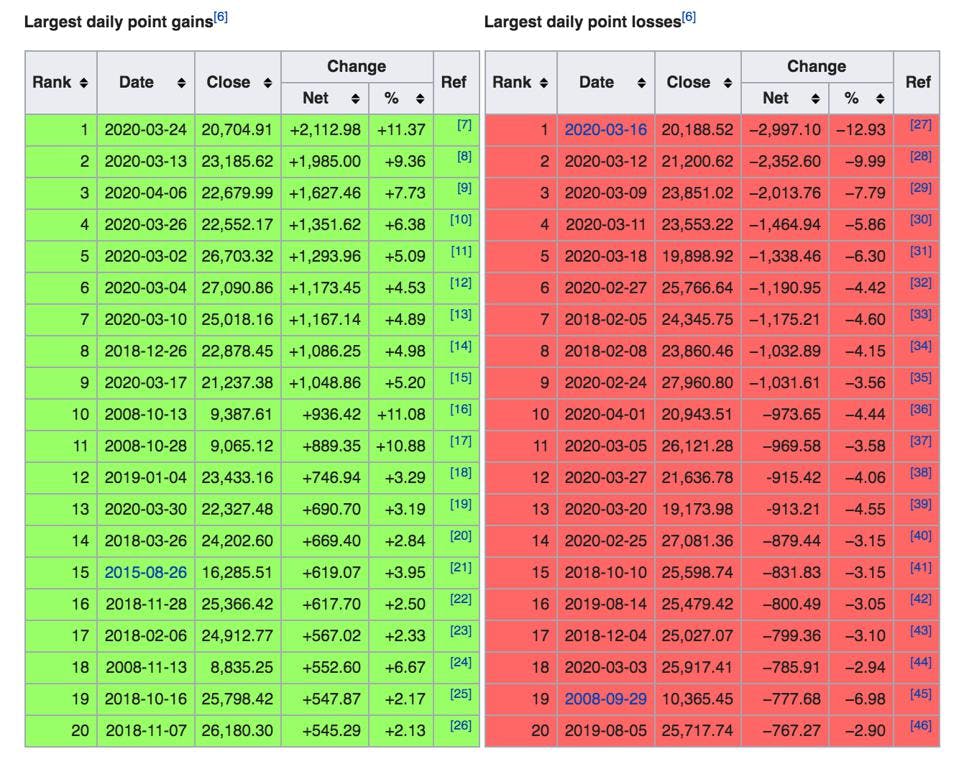
The Dow broke many records in March of 2020. We saw the fastest bear market in history, the largest one-day gain in history, and the Dow had its worst first quarter since 1987.
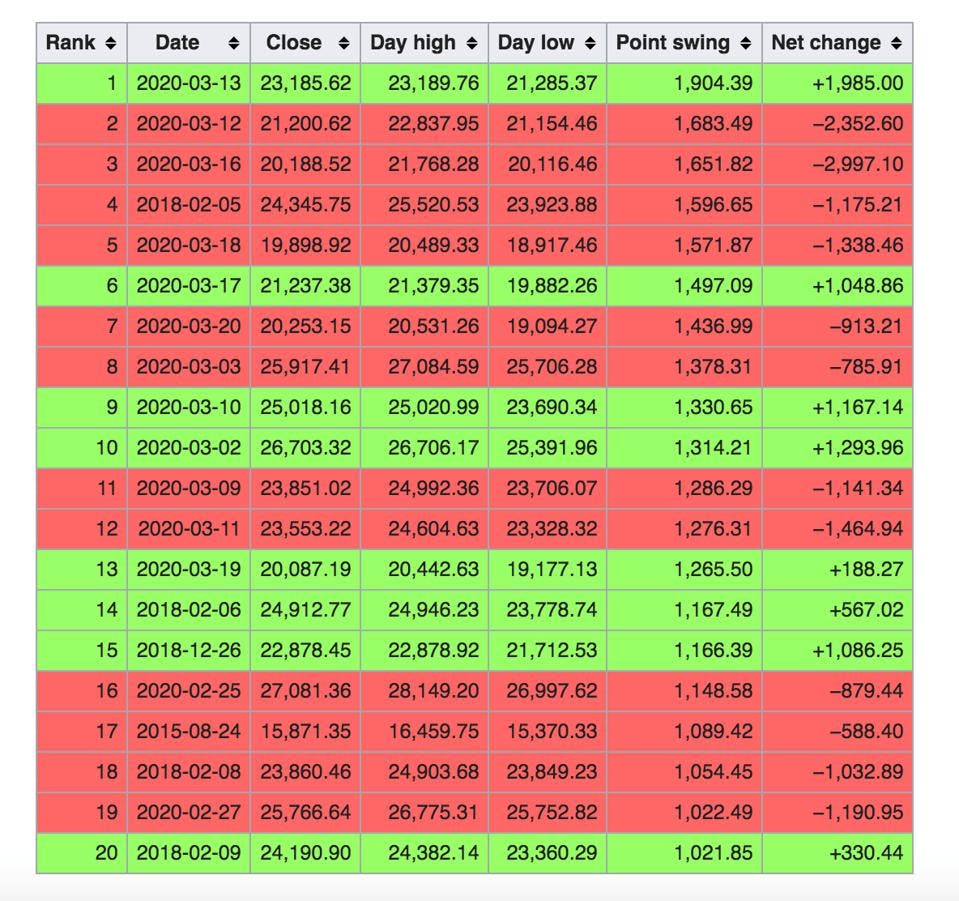
Many more records were broken on the intraday level. For instance, fourteen trading days between February 25th and March 20thmade the top twenty list for largest intraday swings. According to Wikipedia, nine of the top ten positions occurred in a span of three weeks between March 2nd and March 20th.
Throughout the generations, there have been world wars, depressions, recessions and financial market implosions, but this is the first market to be whipsawed by machines. What’s driving the intensity is algorithms which puts wealth preservation at stake as retirement funds compete against quant traders.
Flash rallies and flash crashes are occurring as I write this, with yet another record-breaking day of the Dow gaining 1,627 points on April 6th. Following the fastest bear market and worst first-quarter since ‘87, we have now closed out our best week on the Dow in 45 years on April 9th.
The full effects of this much machine trading is yet to be seen, especially as forward-looking markets must reconcile with double-digit unemployment and other economic uncertainties. While machines can change their allocation in the blink of an eye, many average Americans must grapple with the effects these swings may have on their livelihood.
Source: Wikipedia, List of largest daily changes in Dow JonesWikipedia, List of largest daily changes in Dow Jones
March 2020: Fastest Bear Market in History
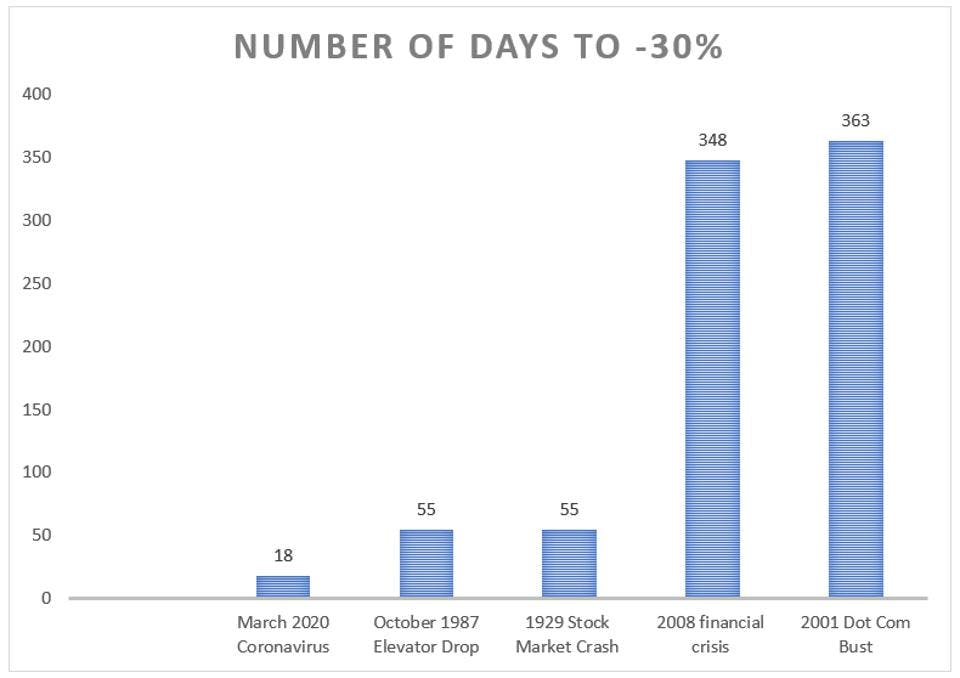
Last month holds the record for how quickly the market plummeted into a bear market at only 16 days starting on February 19th. The contrast is even more severe when calculating how quickly the March 2020 crash hit 30%'
Source: Knox RidleyKnox Ridley
Last month was not for the faint of heart. The bear market of March of 2020 took 19 days to drop 30% while all other black swan events took 55 days or longer. Meanwhile, the economic backdrop includes a health care crisis, high unemployment, canceled school years, and state mandates to “shelter in place.” Machines driving record gains last week are clearly not in a quarantine.
The Fed recently warned that the country could face an unemployment rate of 32%, or 47 million. This would exceed the Great Depression at 24.9%. As we saw in 2008, massive unemployment forces the middle class to withdraw their 401Ks to pay bills. This could cause major unintended consequences from the Federal Reserve policy that pushed retirement accounts into equity markets in order to keep up with inflation.
Despite evidence of negative consequences, rampant algorithmic trading in the financial markets has become accepted as the new norm. However, this will be the first time that algorithmic trading could compound an economic recession as 401Ks have been squandered by the sheer speed of stock market machines. This, of course, depends which way the wind blows next week and how machines react to news headlines with natural language processing (NLP).
Machines Behaving Badly: Faster than “Blink of an Eye”
High-frequency trading costs regular investors up to $5 billion per year, according to a recent study released in January of 2020. The practice of “latency arbitrage” involves arbitraging prices extracted by lower latencies. Better prices are then quickly bought by machines that can move quickly.
The FCA found the machines racing against one another is faster than “the blink of an eye” at 79 millionths of a second. The FCA study tracked 2.2 billion transactions over 43 trading days and found 20% of trading volume was from latency arbitrages. The FCA concluded that latency eliminating latency arbitrage would reduce the cost of trading by 17%. Six firms won the arbitrages 82% of the time.
Sign up for I/O Fund's free newsletter with gains of up to 403% - Click hereSign up for I/O Fund's free newsletter with gains of up to 403% - Click hereClick here
In 2011, electronic inter-dealer broker ICAP had introduced a fifth decimal point to its EBS foreign exchange platform so that its currency pairs such as euro/dollar read as $1.24980, instead of the standard $1.2498. The fifth decimal attracted high-frequency computers, which disrupted the flow of liquidity on the EBS platform. This upset the banks with slower technology as they could not execute large transactions when super-fast computers sliced them into smaller trades. Notably, Deutsche Bank and Barclays had already offered tenth pricing to their customers.