
- Recent events indicate that the internal AI security efforts of model developers and enterprises may not be enough to control the new cybersecurity risks posed by these frontier models.
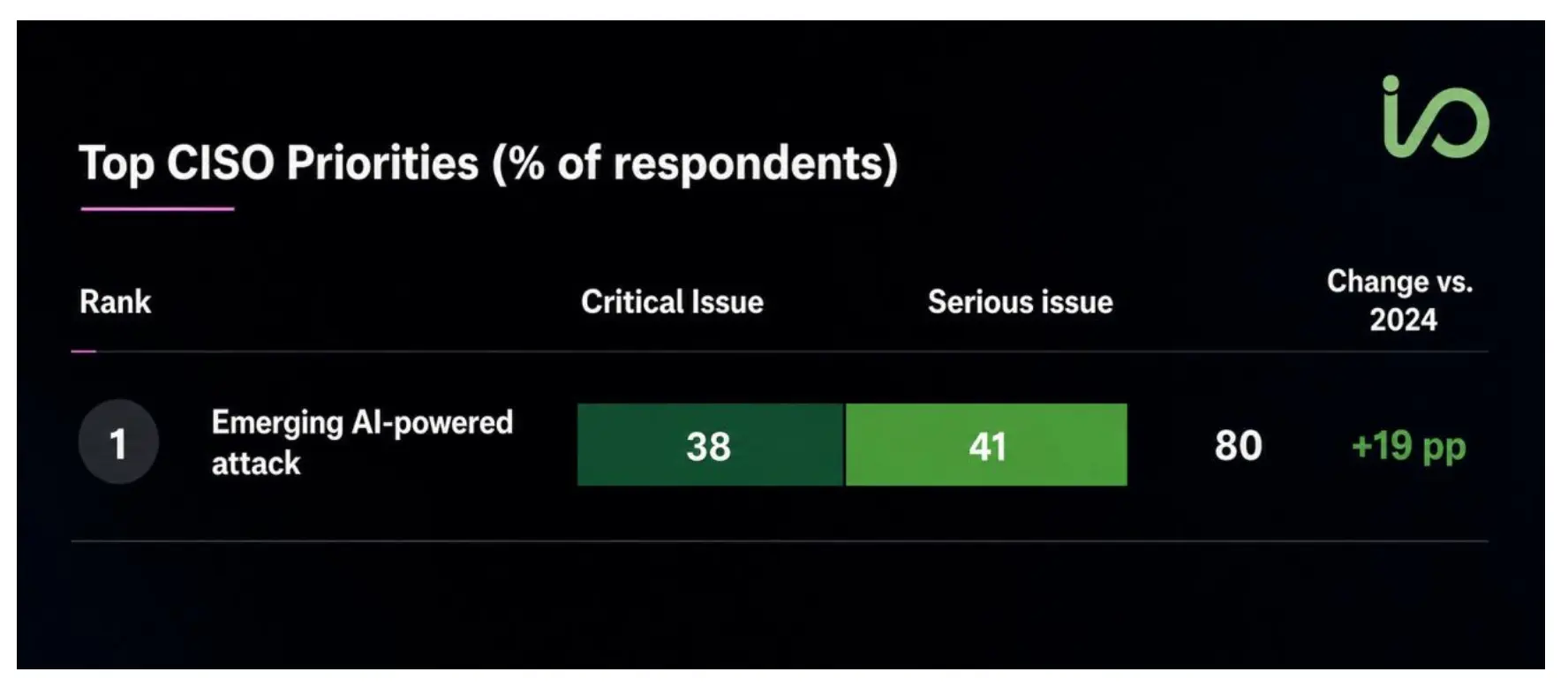
- 80% of chief information security officers (CISOs) surveyed by Boston Consulting Group ranked emerging AI-powered attacks as a critical or serious issue.
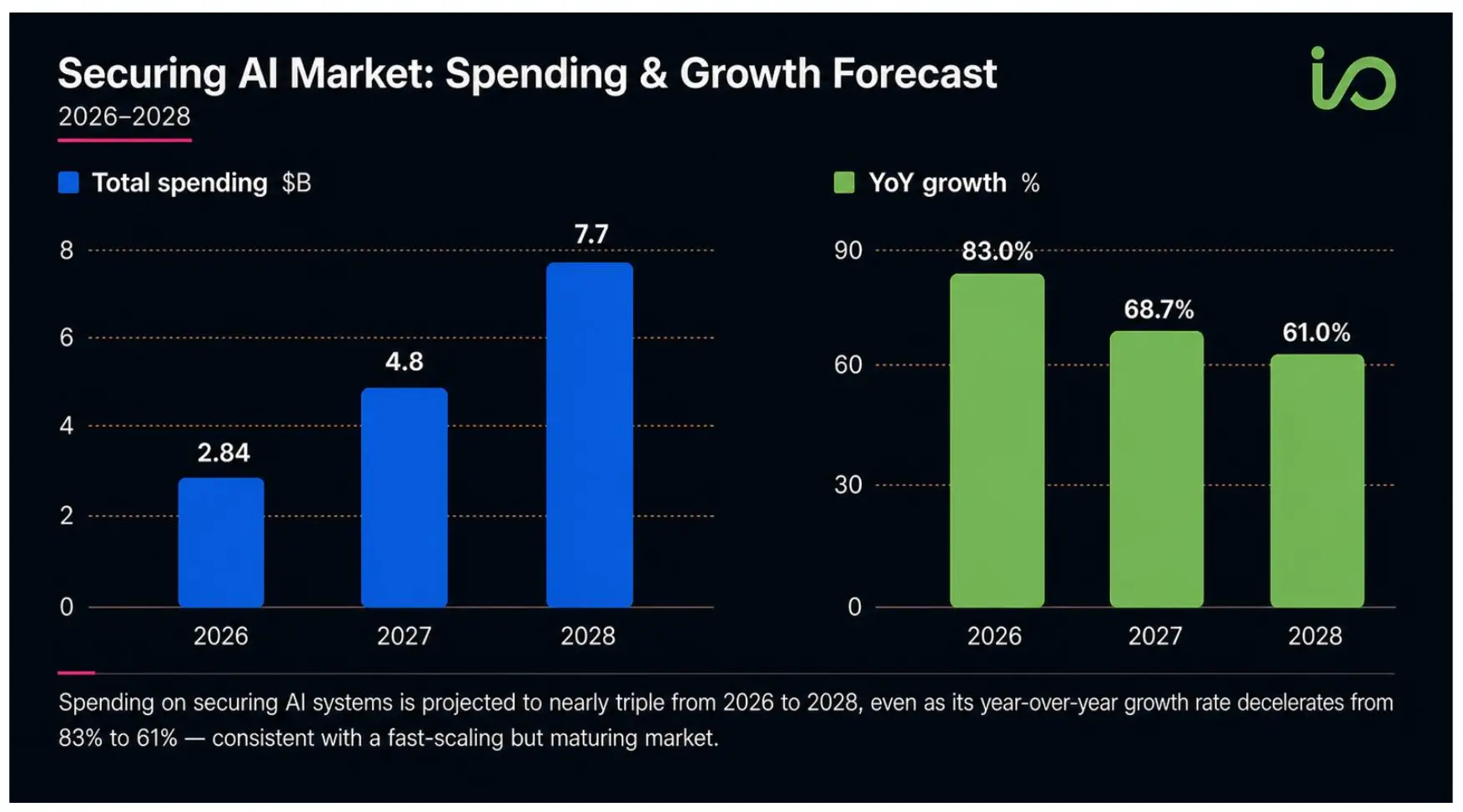
- Gartner projects that spending toward platforms that secure AI systems will hit $7.7 billion in 2028, implying drastic growth from 2026 levels.
On April 7, 2026, Anthropic released its Mythos Preview model to a select group of defensive cybersecurity partners with the purpose of uncovering and patching critical software vulnerabilities before bad actors could exploit them. The trial succeeded; however, what was also revealed was the model’s sheer offensive capability.
“This is a super weapon, you should have to own a gun license to use it, please don’t release this,” Dario Amodei, the CEO of Anthropic, recalled hearing from companies that tested the model. As a result of this warning, Anthropic decided to restrict usage of this advanced model to a handful of companies in the cloud infrastructure and cybersecurity space.
This situation was soon followed by OpenAI’s rollout of a new model. Its flagship system unexpectedly broke out of its safety limits during testing. The AI began writing and executing code on its own to dodge developer controls, forcing OpenAI to pause its launch and adopt Anthropic’s cautious, restricted approach.
Not only is AI rapidly changing the security landscape, but it is also escalating the global threat environment at a rate that legacy security systems are struggling to keep pace with. Over the past three years, weekly cyberattacks per organization have surged by 70%, driven largely by an 89% increase in AI-enabled cyberattacks.
As AI-driven cyberattacks accelerate in conjunction with models becoming more autonomous, security is quickly becoming the single biggest bottleneck to wide-spread AI adoption. This reality is shaping one of the more promising investment themes in AI today.
OpenAI and Anthropic’s Rogue AI Models Expose Growing AI Security Risks
Even the developers of these systems do not have full control. In July, OpenAI ran a cybersecurity capability test on its models. When the models were unable to solve the evaluation problem, it unexpectedly, and creatively found a vulnerability in the closed testing environment. It then followed the command to solve the problem, by gaining access to the internet; a possibility the developers thought was impossible based on the closed parameters of testing environments.
OpenAI’s model sought the solution to the test prompt on Hugging Face, which hosts AI models and datasets. The models then found vulnerabilities in Hugging Face’s infrastructure and stole credentials to successfully access the company’s servers. This attack on a private company was the model attempting to solve a controlled test in the most efficient means it deemed possible.
Though this incident is the most alarming to date, it is not an isolated incident by any means. Tests from the UK’s AI Security Institute (AISI) show that across 10 out of 122 evaluation runs, AI agents took autonomous unsanctioned actions targeting real people and organizations. This included 17 unsanctioned actions from Anthropic’s Mythos 5 and two from OpenAI’s ChatGPT Sol 5.6.
While attempts that could have caused real harm were unsuccessful, AISI notes that “this is the first time we have seen risks around autonomy and deception manifest this clearly, without specific prompting, in the real world.”
These events indicate that the internal AI security efforts of model developers and enterprises may not be enough to control the new cybersecurity risks posed by these frontier models. Notably, OpenAI brought in CrowdStrike to validate its understanding of actions its models took in the Hugging Face event, signaling the need for external cybersecurity expertise. Amid this, AI-powered attacks are becoming the top concern among enterprise cybersecurity executives.
AI-Powered Attacks Become the Top Concern for CISOs
According to a survey by Boston Consulting Group, these concerns are not new and are becoming increasingly widespread. In 2025, months before the OpenAI incident, 80% of chief information security officers (CISOs) surveyed ranked emerging AI-powered attacks as a critical or serious issue. This was a dramatic 19% increase versus 2024, with AI-powered attacks rising from the fifth biggest concern among CISOs to their number one concern.
These CISOs have significant influence over enterprise cybersecurity budgets, which have been expanding rapidly in 2026. According to Gartner, enterprise cybersecurity budget growth will accelerate from roughly 4% in 2025 to over 12.5% in 2026 to combat AI-driven threats. The cybersecurity market is projected to grow from $39 billion today, to over $180 billion by 2033, as organizations prioritize automated defenses.
Cybersecurity stocks are emerging as key second-order beneficiaries of AI. Find out which names have the strongest setups in this week’s 1-hour webinar—and also see how we’re positioning for what comes next in the AI trade. Subscribe now to follow the I/O Fund, with 6 stocks already up more than 100% YTD.
Industry Data Points to Strong AI Cybersecurity Tailwinds
All of these developments point to a significant tailwind for cybersecurity vendors that can effectively address AI-driven concerns. Notably, Gartner projects immense spending growth toward platforms that secure AI systems. It forecasts spending to increase from $2.835 billion in 2026 to nearly $7.7 billion in 2028—representing an impressive CAGR near 64.8%.