

The last few months have been difficult for tech growth investors. In isolation, it would appear that the party is over, and the broad market is likely to follow. However, if we track where the money is flowing, it appears that the standard safe haven plays, like Staples, Utilities and Gold, are not receiving the bulk of the rotation. Instead, money is flowing into transportation stocks, industrial stocks and financials.
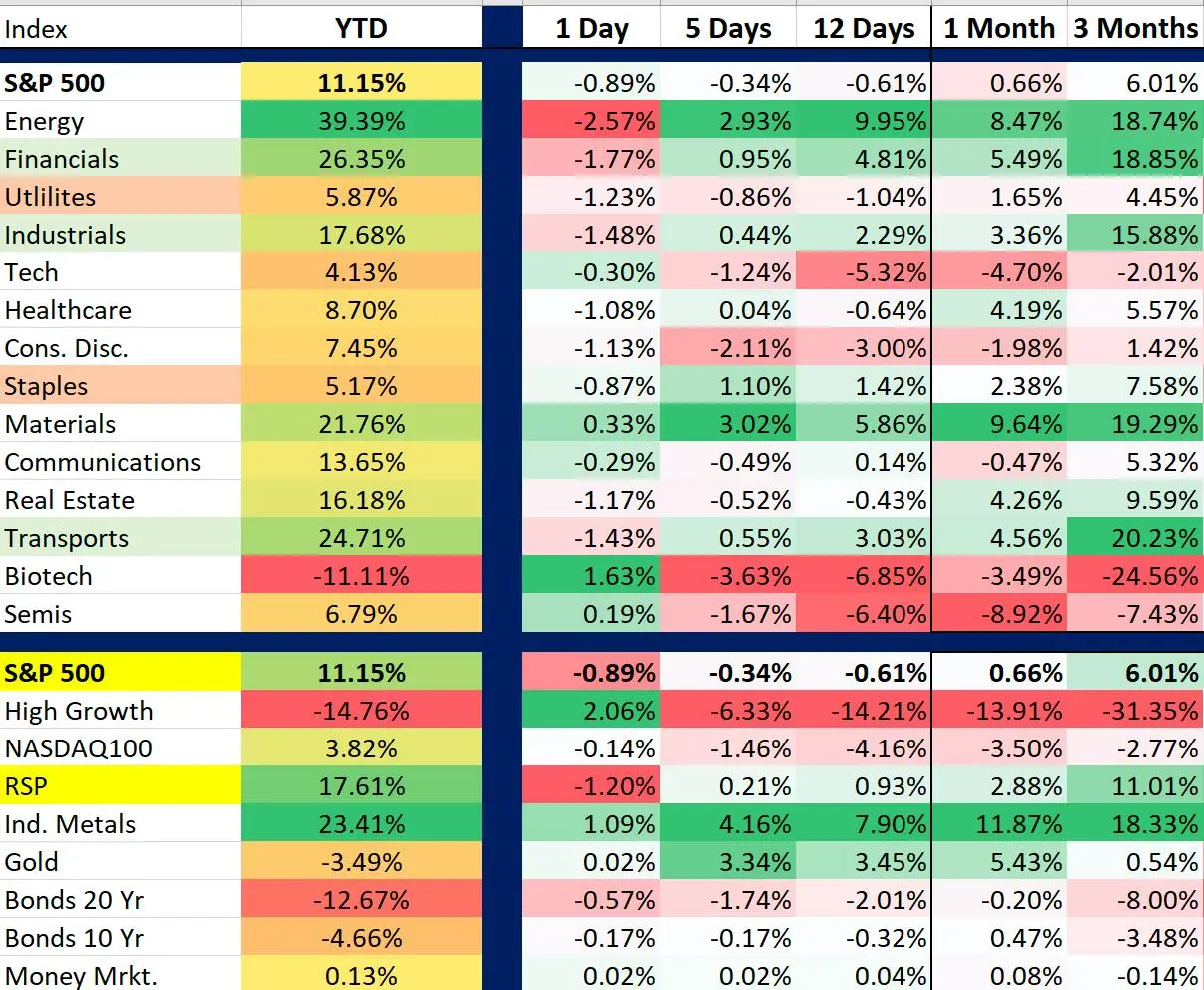
This does not hint at a pre-recession bear market, and instead appears to be quite bullish for a long-term advance. Furthermore, if we note the outperformance of the equal-weight S&P 500 vs. the market-cap weighted S&P 500, this trend also speaks of an economy that is primed for expansion. In other words, the weight index is more representative of a healthier economy, while the market-cap weighted index is focused in bigger names that are in strong trends.
Despite the narrative around inflation fears, or the economy priming for a post-covid world, within the context of last year’s incredible advance, this drawdown in tech growth appears to be normal given the gains we saw last year. Last year was an overreaction, and this year is an overreaction in the opposite direction. We don’t let this scare us out of quality tech companies and we believe the sell-off is providing some stellar opportunities. In fact, earnings prove tech isn’t slowing down in the face of tough covid comps.
One of those names is Roku. Beth Kindig was the first analyst to understand the ad platform story and the first to recommend the company in May of 2018. Since then, as the portfolio manager for the research site, I’ve successfully entered the stock many times, including as low as $28. Yet more importantly, I’ve also cautioned our readers when we weren’t buying for the I/O portfolio, such as when the stock was over-extended and did not have a favorable setup.
For instance, there were signs of weakness in Roku at the all-time high. We noted several times that the momentum was fading at key resistance zone and warned our subscribers. Now, with prices down as much as 36%, we are seeing the current pullback as a normal drawdown within a much larger uptrend.