

Data privacy will be affecting stocks into the near future and will likely catch Wall Street off guard as the minutiae is hard to sift through. Alphabet’s data machine has the longest tentacles of any company on the public market today, yet Facebook continues to carry the headlines. There are specific reasons that Alphabet has done a much better job at handling data, which in turn, creates a safer stock for investors. Even if some of the Google’s data collection policies are at odds with privacy advocates, Alphabet is being more transparent through SEC filings and offers a disclosure around revenue sources.
Last week, there was an important insider leak reported in Adweek that Google is “contemplating a number of changes to its consumer -and advertiser-facing tools.” Criteo’s stock dropped 30% when the news broke and TradeDesk saw a 15% drop while Alphabet’s stock showed the least impact at 5%. I believe this market reaction, which penalized Alphabet the least, is due to a misunderstanding around the implications of third-party revenue for Alphabet.
This analysis will break down why the intel leaked to the ad industry late last month is important for stock investors to pay attention to.
Overview:
The official list of companies who are in a grey area with how they collect and use data is Google, Facebook, Amazon, Twitter and Snap. You can add Spotify to that list too, although their data is minor compared to the bigger players. The reason these companies are at risk is because there is a conflict of interest in collecting first-party data with people you have a direct business relationship with and brokering this to third-party companies.
Let’s reframe this so it’s easier to picture. For instance, what if your credit card company brokered your data to run ads? They have more information on you than Facebook or Google because Mastercard and Visa knows your every purchase. They would make A LOT of money if they anonymized your data, assigned you an ID number, and let advertisers target you based on what you bought with your credit card. In fact, purchase history is the most valuable data to an advertiser and they would pay much higher amounts for this than social media data or search data. Mastercard and Visa don’t do this because it’s against regulations. This is what the online and mobile industries face who are brokering first-party data to third-party companies to target people and run ads.
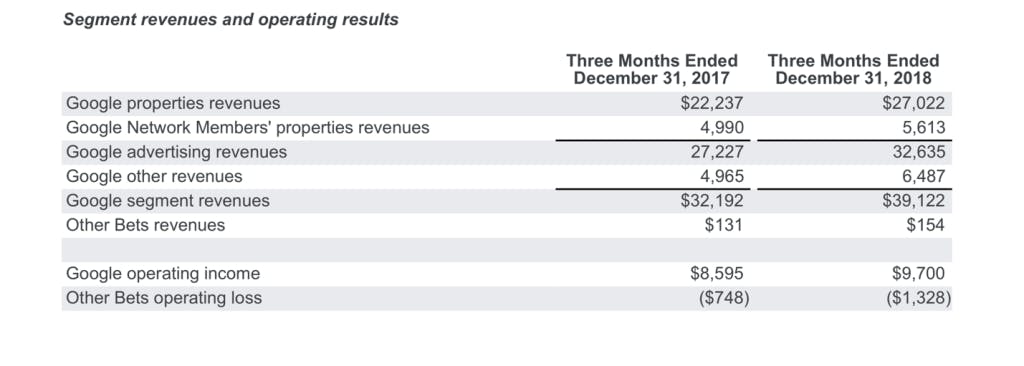
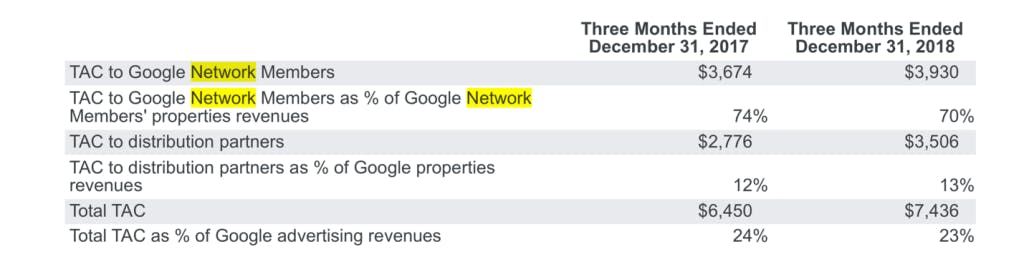
Going back to Google. Of the companies listed above, Google is being the most proactive and has the least amount to lose (Amazon is a close second with the least amount to lose). This is because Google makes money from search engine inquiries, with advertisements based on your search criteria, and not targeted to who you are as a person. However, there’s a chance that Google could lose up to $5 billion per quarter if the insider information to AdWeek is accurate. One reason is because if Google prevents ad networks from running ads in the Chrome browser, they will risk anti-trust if they continue to do so themselves. There is also a conflict of interest for first-party data companies to run third-party ads through a demand-side ad platform, where advertisers go online to place ads using proprietary data.
Especially if Google wants to be a leader in artificial intelligence, which will require a privacy adherent company policy, it is my prediction that Google will part with the third-party ad revenue to win big on AI in the coming years.
Intel from the Ad Industry:
Here’s an excerpt from the Adweek article Google Mulls Third-Party Ad-Targeting RestrictionsGoogle Mulls Third-Party Ad-Targeting Restrictions: “According to sources, certain Google teams want to placate the growing zeitgeist around the protection of consumers’ data privacy, which has grown ever louder since the Cambridge Analytica scandal last year. These internal discussions also follow the implementation of third-party tracking restrictions on Apple’s web browser, Safari, and similar moves from Mozilla’s Firefox and Brave’s offering in recent months. Although the various businesses within Google advocate similar measures, the breadth of the company’s interests (i.e., the dominance of its Chrome browser and ad-tech stack) make its decision-making process more complex.”