
Bitcoin

Is Bitcoin a Good Investment? Phase 3: Bitcoin Mobile Payments

Written by

Beth Kindig

Founder, CEO and Lead Technology Analyst

Published: July 19, 2019

Last Updated: July 19, 2019

Institutional adoption of bitcoin and economic uncertainty are two phases previously discussed in this series that evaluates if bitcoin will make a good investment. Finding the right entry price is critical for a buy and hold strategy as there is unusual volatility in this asset. Trading bitcoin may be successful for some; however, this series predicts that holding bitcoin until the technology matures is the better option – all of which is dependent on the right entry price for this volatile, yet high-potential asset

Bitcoin is not trading at support levels and there will likely be a better entry later this year. Also, this is a mix of tech analysis and my opinions; not financial advice

The third phase that will contribute to bitcoin’s potential as an investment will be the adoption of crypto wallets and crypto payment transactions. Today, bitcoin is a speculative play. The tipping point will occur when bitcoin is used for transactions. Psychologically, bitcoin will have a permanent place in society when this occurs, and the value of bitcoin will reflect this due to the limited supply of the coin.

Bitcoin and Free Markets

Bitcoin’s ultimate opportunity will be reached when the coin provides seamless and low-cost digital transactions. Opponents to bitcoin believe central banks and governments will create obstacles that cryptocurrency cannot overcome. However, the free market is already moving towards capitalizing on bitcoin as many corporations do not want to miss out on this opportunity.

As discussed, Starbucks is partnering  with Bakkt, and this will create a payment gateway for the security-backed exchange. Keep in mind, Starbucks’ payment app has more users than Google Pay or Apple Pay

Several more online retailers are currently accepting bitcoin payments, such as:

  • Wikipedia accepts donations in bitcoin
  • Expedia accepts bitcoin through Coinbase
  • KFC accepts bitcoin through BitPay
  • Overstock accepts bitcoin through Coinbase
  • Subway branches (where available) accepts bitcoin as a payment
  • Virgin Mobile and Virgin Airlines accepts bitcoin for space travel
  • CheapAir accepts bitcoin through Coinbase
  • Purse.io allows you to shop on Amazon and pay with bitcoin
  • Hotels.com will reward you with micro-amounts of bitcoin for booking through the site

Notably, AT&T became the first major U.S. mobile carrier to let customers pay in bitcoin through a third-party service provider.

There are important distinctions between bitcoin and digital transactions. Knowing the difference between AliPay, Venmo, Apple Pay, Facebook’s Libra, JP Morgan’s JPM Coin – and why bitcoin is not like any of these options is critical to understand. This has been covered in the previous articles in this series, Part 1: Institutions, and Part 2: Economic Uncertainty. Here is a side-by-side comparison that summarizes key differences:
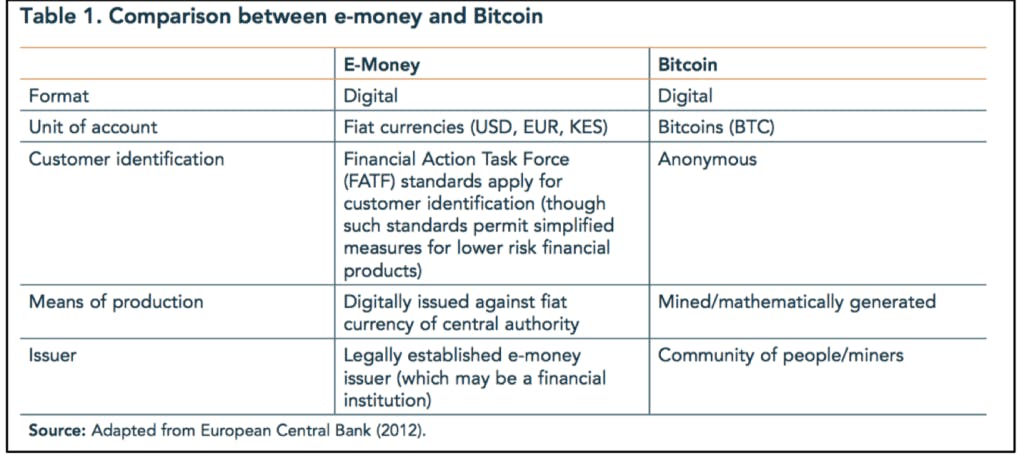
Source: UMN.edu

Emerging Payment Options

Paying for daily goods with a mobile wallet, tied to crypto, will become effortless in the years to come. One of the leading startups right now is Flexa’s SPEDN, which is linked to fifteen retailers, such as Whole Foods, Barnes and Noble, Nordstrom, Petco, Ulta Beauty, Lowe’s and Bed, Bath and Beyond.

The app integrates existing point-of-sale with blockchain technologies and simplifies the payment settlement process for the merchant while allowing Ether, Bitcoin, Bitcoin Cash and the Gemini dollar payments. As Gemini’s CEO Tyler Winklevoss stated, “This technology shifts cryptocurrency from investment and speculation toward real usability.”

Beth Kindig, founder and lead tech analyst of I/O Fund

Get Our Free Weekly Stock Newsletter

Get weekly stock insights, market analysis, and technology updates straight to your inbox.

  • Weekly stock insights
  • Market analysis
  • Technology updates

There will be many startups offering to bridge the gap between crypto’s current lack of flexibility and the broader world of crypto users who want to pay with an alternative form of currency. The barrier to entry is relatively low, requiring a team of software developers, compared to 5G or autonomous vehicles, which require entirely new infrastructure or complex robotic systems.

Thus, the number of startups in this space is likely to swell. Whatever friction exists for crypto payments, technically speaking, will be solved in short order over the next few years.

As stated, larger corporations and the free market are driving the supply forward. To interrupt this process, via the Federal Reserve, the IRS, or control from other central banks, will require direct action against free markets – and, essentially, capitalism. In addition, stopping the advancement of technology around blockchain will severely hinder a free market economy as blockchain transactions reduce intermediary fees, that in turn, lowers debt and improves savings for the financial system and all of its participants.

Blockchain and cryptocurrencies also assist banking with a much more secure, decentralized system. Too many critics misunderstand how development around Bitcoin, Ethereum and blockchain protocols improves the fiat system by removing unnecessary costs. The token, bitcoin, may compete with fiat currencies, but development around the token is essential right now for an economy to run on blockchain in the future (even if the bitcoin blockchain is not the one adopted).

The countries that do adopt blockchain, and some form of cryptocurrency, will be superior technologically speaking, and the United States is very unlikely to halt this progress by attacking Bitcoin – a token and a protocol that is laying the groundwork for economic efficiency. 

The more likely response from the federal government will be a centralized, regulated token that competes with bitcoin (while allowing bitcoin to run its course). There is room for both, and to repeat this point, development around bitcoin will cut the path for any centralized tokens. The Federal government cannot hinder development around bitcoin while expecting to have a federal cryptocurrency in the future; this would be counterproductive.

Despite the likelihood of a centralized domestic token, my prediction is that bitcoin’s value will persist due to its global potential, as covered in my previous articles in this series.

Recommended Reading:

Will Bitcoin Make a Good Investment? Phase 2: Economic UncertaintyWill Bitcoin Make a Good Investment? Part 1: Institutional Adoption

Paid subscribers to my Research Services will receive the following additional information:

  • Scenarios for when to enter the asset and build a buy and hold strategy.
  • Why I timed my analysis to Q2/Q3 2019 (and not 2018 or 2020) – from a fundamental standpoint.
  • The one alt-coin that I am watching closely and has potential for a 1000% return along with recommendations timed for the next (and perhaps final) pullback for this alt-coin.

About the author

Beth Kindig

Beth Kindig

Profile

Beth Kindig is the Founder, CEO and Lead Technology Analyst at I/O Fund, with more than 15 years of experience covering private and public technology companies. Known for her early Nvidia research beginning in 2018 and bold, high-conviction calls on emerging technology trends, Beth also manages I/O Fund's audited technology portfolio, which has returned 326% since May 2020, or 29.2% annualized. She is a regular guest on Fox Business and Bloomberg and has appeared on Real Vision, CNBC, Yahoo Finance, BBC, MarketWatch, Forbes, and more.

Curation

Expand your knowledge

View all posts
Amazon’s AI Data Center Expansion Faces a New Roadblock Ahead of November 17 Vote
DATA CENTER

Amazon’s AI Data Center Expansion Faces a New Roadblock Ahead of November 17 Vote

Amazon dropped data centers on its $427 million Ashburn campus after local pushback. Loudoun votes November 17 on a 12-month pause for data center approvals. Is permission the new bottleneck for the AI buildout?

DATA CENTERNOV 16, 2026
AMD Stock: Two-Catalyst Punch Leads to 80% Growth Next Year
SEMICONDUCTOR STOCKS

AMD Stock: Two-Catalyst Punch Leads to 80% Growth Next Year

In August, our premium article "Venice Meets Helios" pointed to two strategic product releases that were arriving soon - AMD’s Venice CPUs and the highly anticipated Helios MI400 Series. At the time, management expected server CPU revenue to grow more than 70% in 2027, while total Data Center revenue would grow “well over 100%,” driven by the Helios ramp. Three months later, AMD has raised its outlook considerably, and the two product ramps are now exceeding the I/O Fund’s original expectations. Server CPU revenue is now expected to more than double in 2027, up from the previous outlook for 70%+ growth. Meanwhile, Data Center AI revenue (GPUs) is expected to significantly more than double.

SEMICONDUCTOR STOCKSNOV 13, 2026
Nvidia Says Capacity Is the Constraint: 3 Bottlenecks Holding Back the AI Buildout
AI STOCKS

Nvidia Says Capacity Is the Constraint: 3 Bottlenecks Holding Back the AI Buildout

Nvidia has signed capacity agreements with six key suppliers for chip parts and has a new design to build AI data centers, even as CEO Jensen Huang points out extraordinary demand amid capacity constraints. However, grid power remains the limit Nvidia can’t fix on its own.

AI STOCKSNOV 13, 2026