

In 2023, the Nasdaq-100 saw its best year since 2009 with returns of 54%. Meanwhile, the S&P 500 finished the year up over 24%, which rivaled 2021’s banner year. The question that should be on every investor’s mind in 2024 is – will this performance continue?
In this article, I lay out both the bull and bear cases for 2024 and beyond. Interestingly, both are calling for a level of volatility in 2024 that will, at least, retrace the rally we’ve seen since November 2023.
Bull Case vs. Bear Case
All trends fit within repeatable patterns. In technical analysis, these patterns repeat in all markets and on all time scales. The only bullish interpretation of the pattern that has developed off the October 2022 lows is what we call a leading diagonal pattern, which generally develops as shown below.
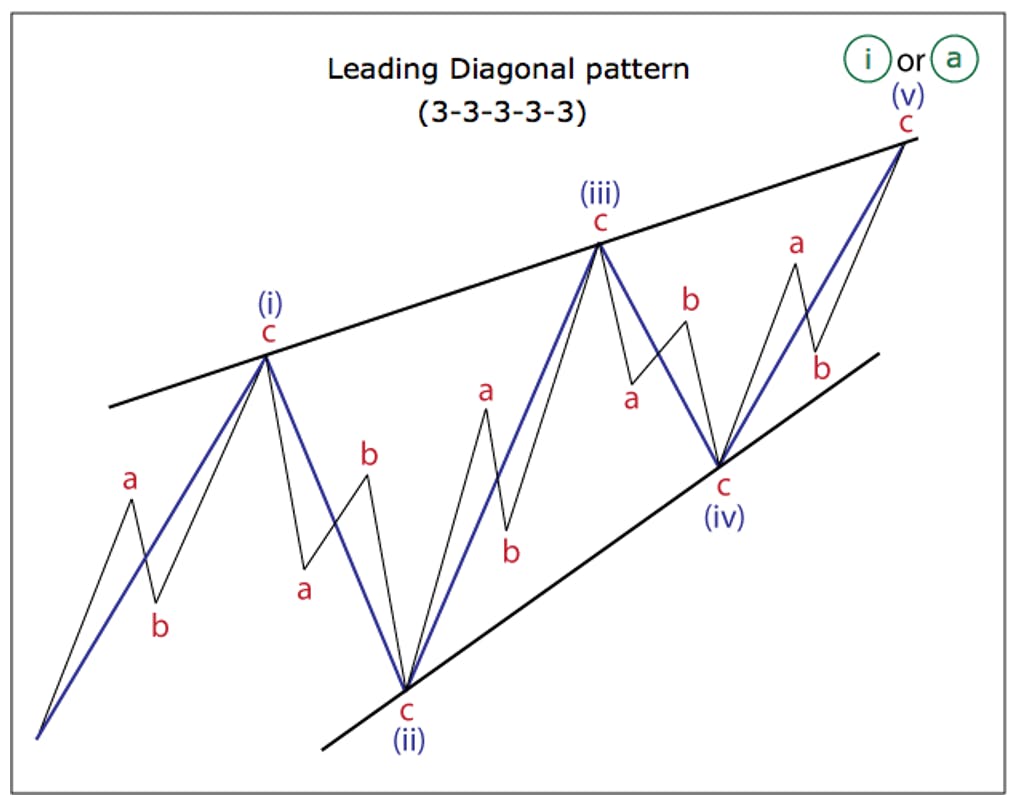
This is a 5 wave pattern that has large and choppy swings in both directions. The key is the 4th wave moving into 1st wave territory, which is what happened in 2023.
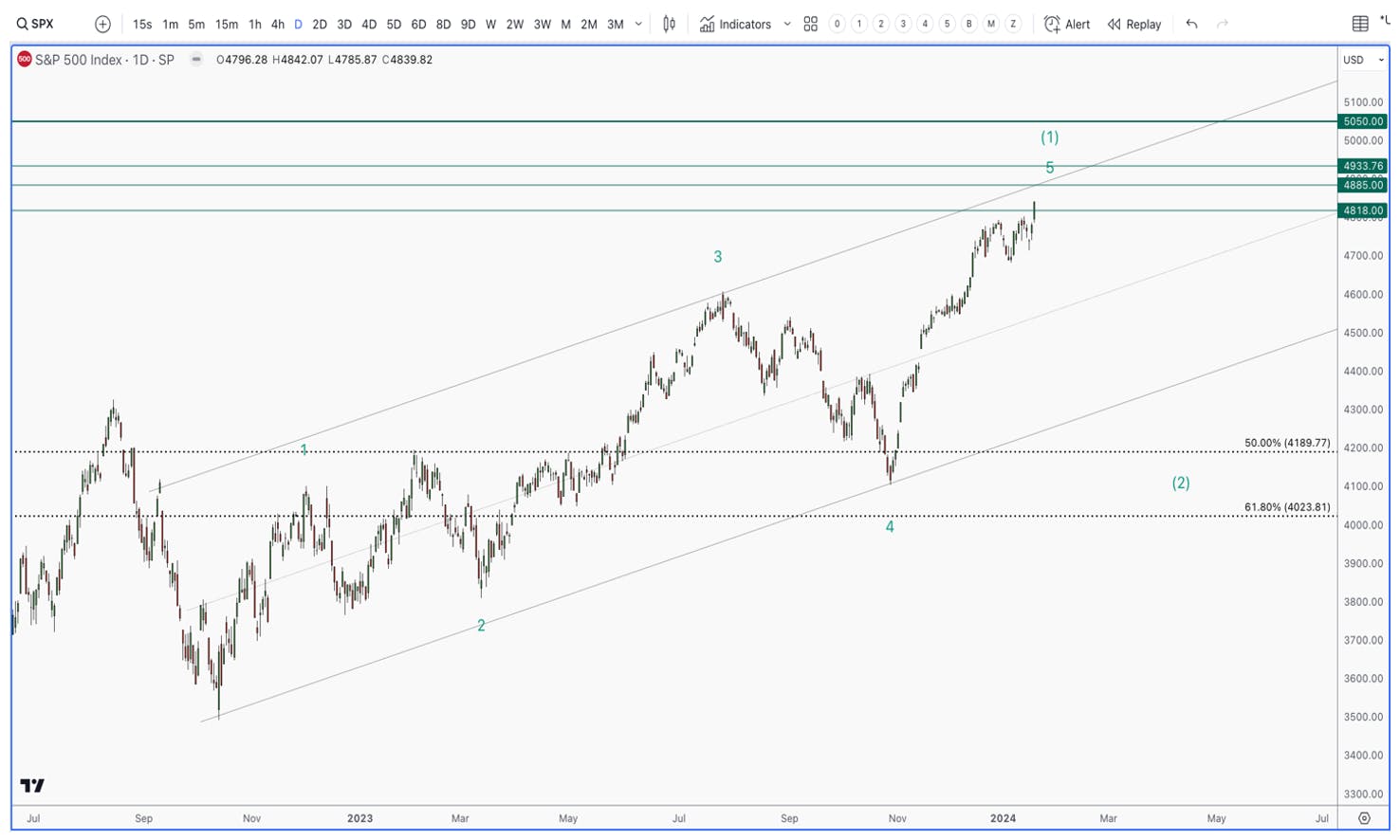
If this is what is playing out, then it’s worth noting the 5th wave is coming to an end. This means the larger pattern is almost complete, which should give way to a multi-month correction. The implication here is that the leading diagonal is the 1st wave in a very large 5 wave pattern that will take years to complete.
I have many problems with this scenario, the biggest one is that it does not fit within the context of the secular bull market that started in 2009. That bull market pattern simply does not have room to allow for another multi-year bull run, which makes this scenario a low probability outcome.
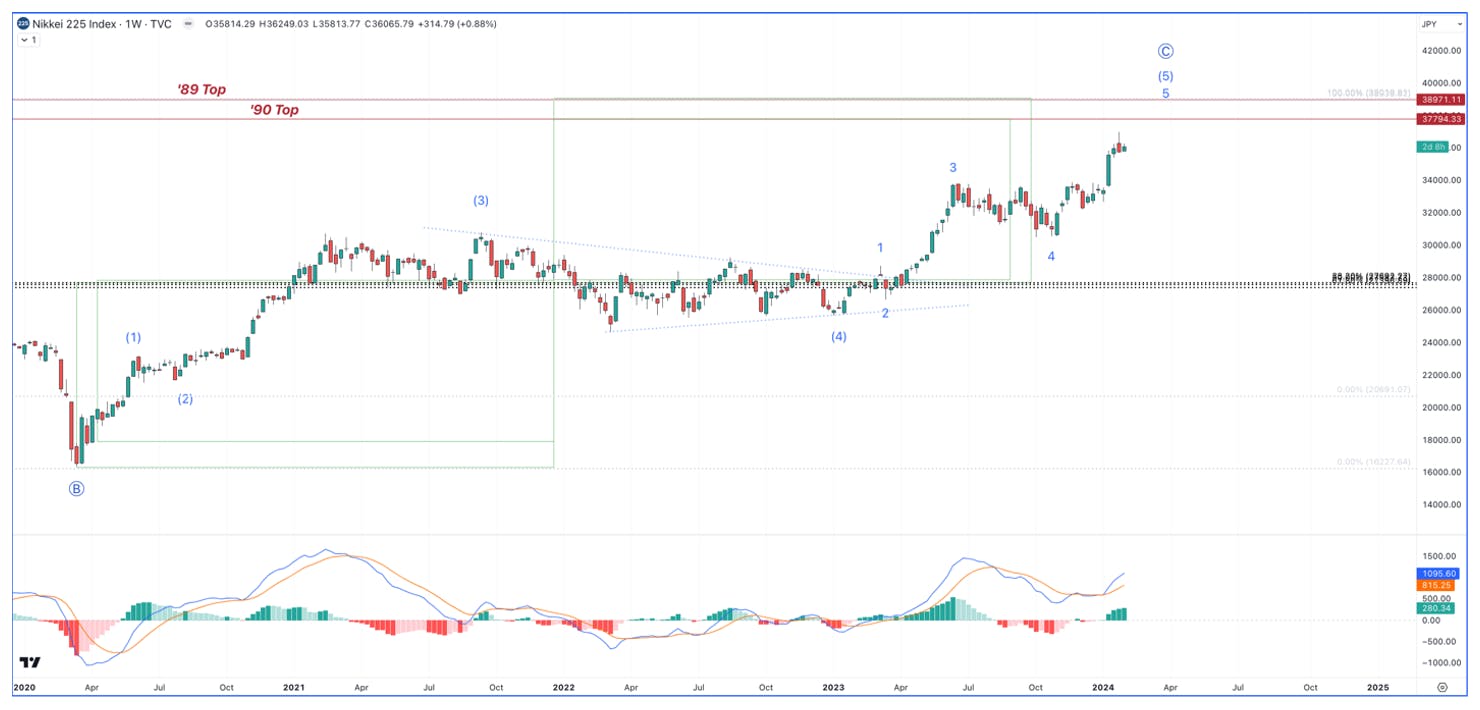
The bear case, which does fit in within the larger context, suggests that 2023 was a cyclical bull market within a secular bear market. In Elliott Wave speak, 2022 was your large A wave, 2023 is the large B wave bounce, and 2024-2025 will be your large C wave drop to new lows.
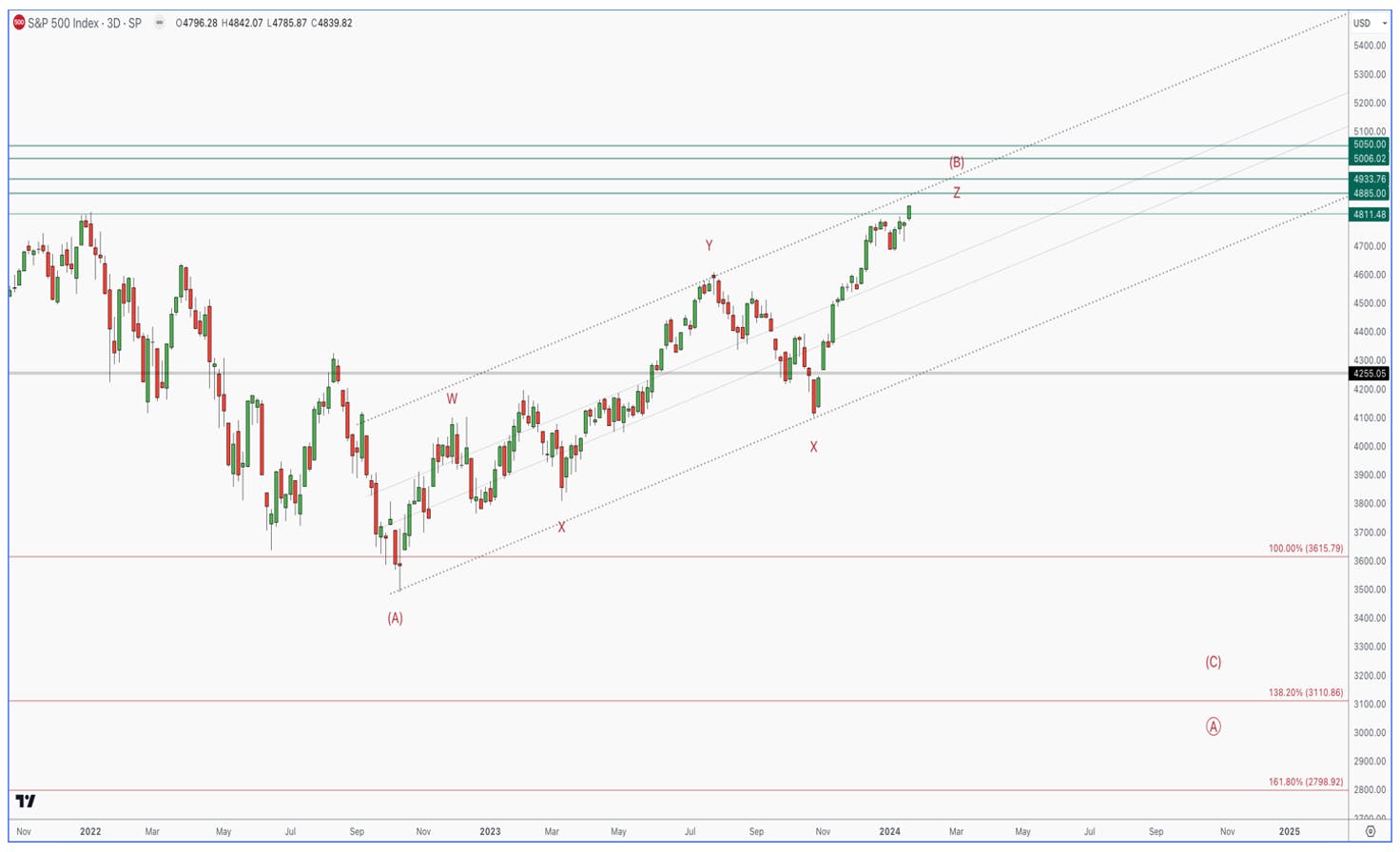
Regardless of whatever the long-term pattern that unfolds, it’s worth noting that both interpretations are calling for a multi-month drop into mid-2024, which should retrace the bulk of the rally off the November 2023 lows.
Timing the 2024 Top
The pattern that is playing out since the November lows in 2023 can be interpreted in three general ways. Keep in mind, it is part of the larger leading diagonal pattern that started in 2022. This means that there is a limit to how high it can extend from here.
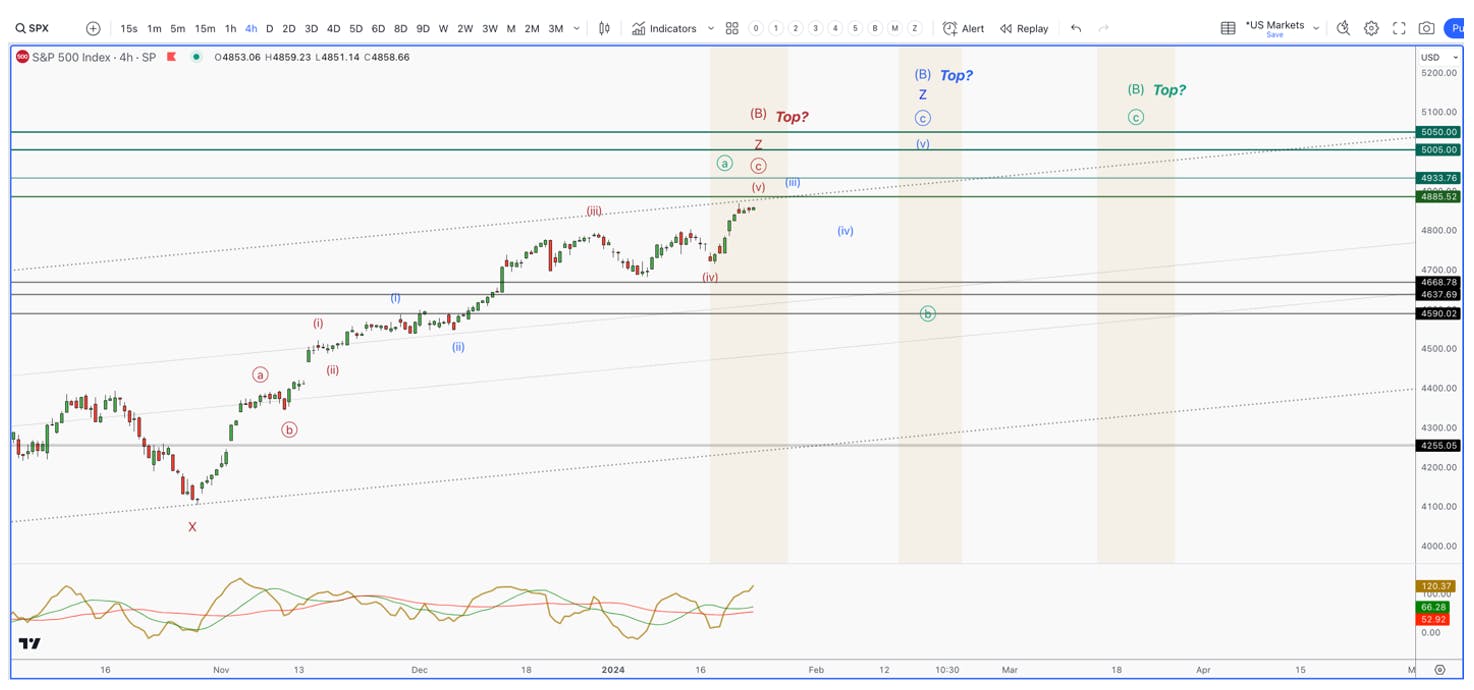
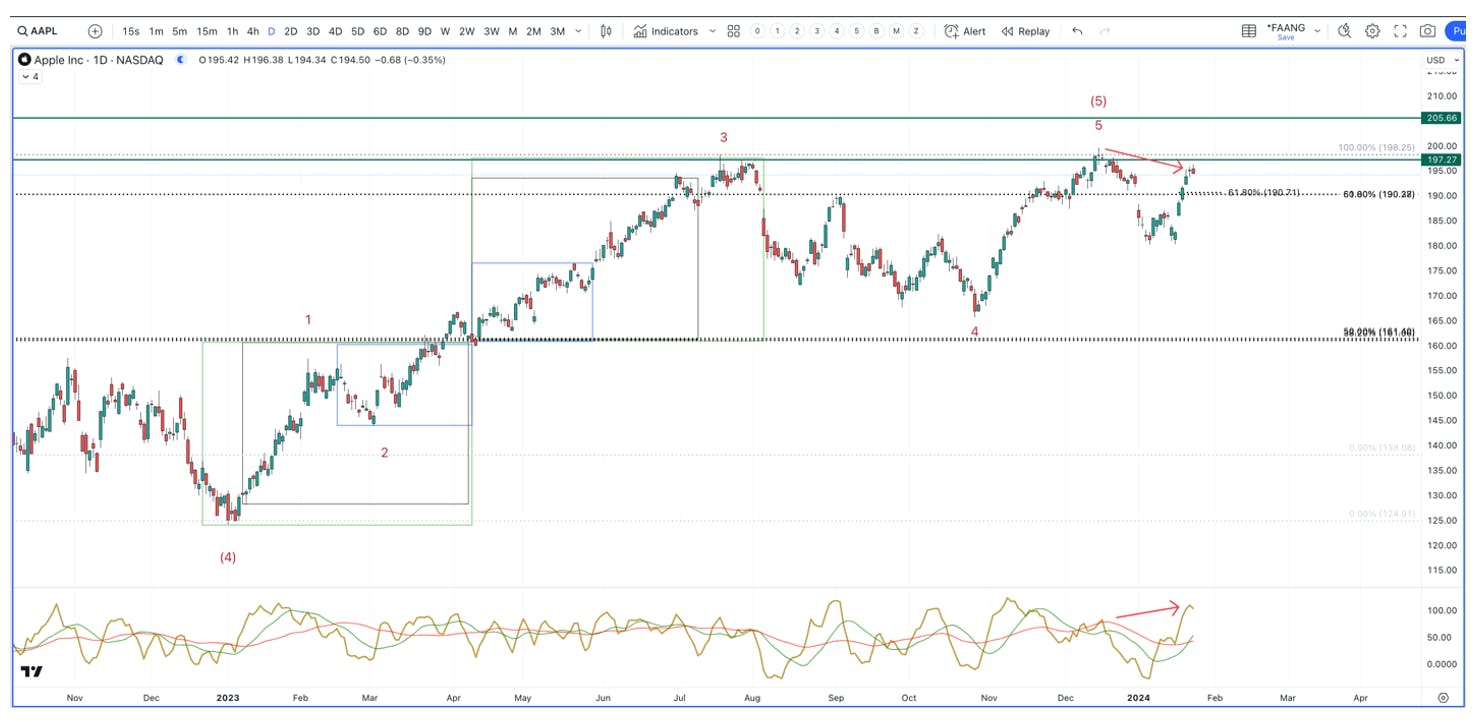
- Red Count – This count suggests that we are in the final 5th wave within the larger uptrend pattern that started in October of 2022. We should see the markets roll over soon once this final 5th wave ends.
- Blue Count – this count has us in a 3rd wave, which should lead to a minor dip, followed by a final 5th wave into the 5000 - 5050 region.
- Green Count – this pattern will see a deep retrace followed by a bullish leg into late March/early April.
When we analyze other markets, the evidence suggests that the green count is a low probability scenario. The likely outcome will be a complex topping process that starts in late January and lasts into mid/late February.
Intermarket Analysis
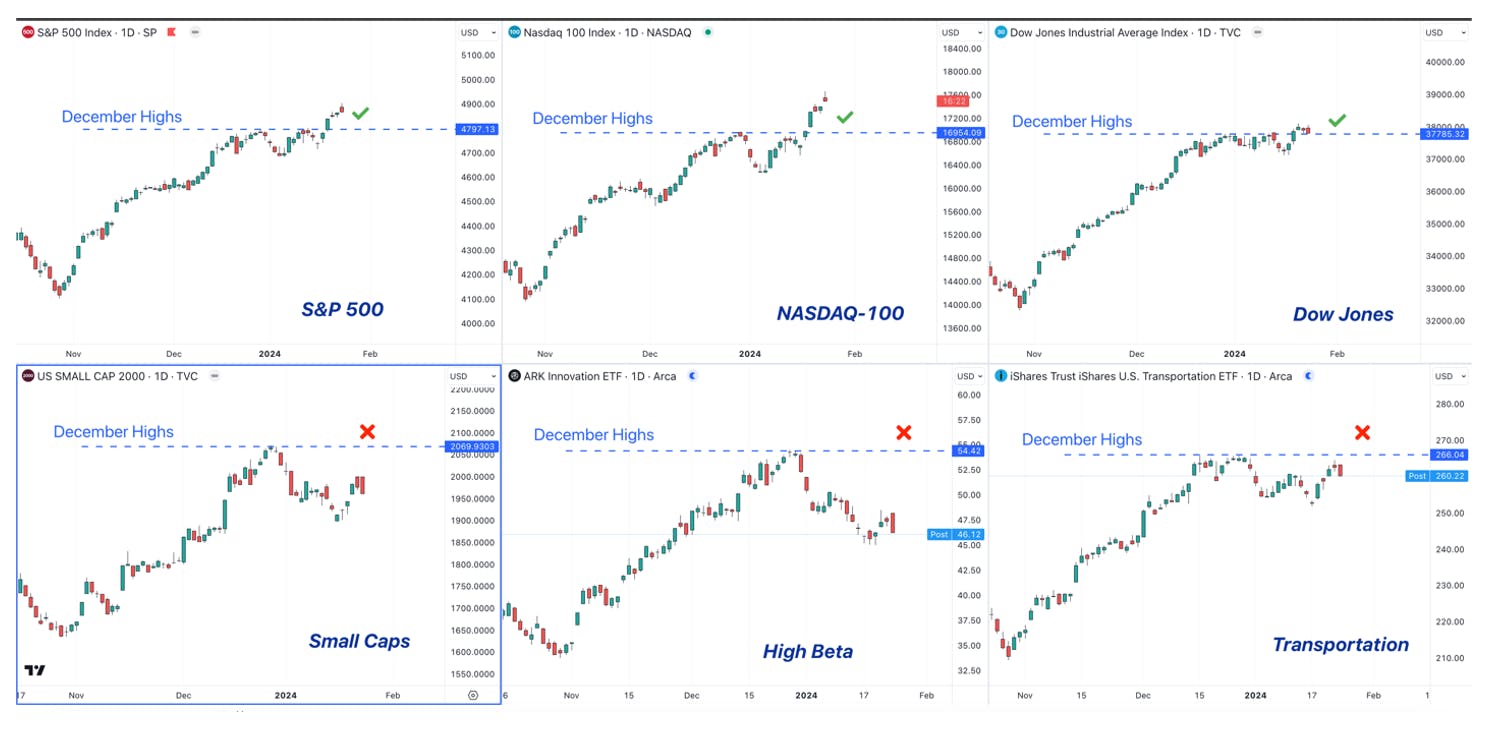
The green count is calling for a deep retrace of the November rally, followed by a rally that should be equal in length. The problem with this scenario is that most markets are only showing a potential minor swing higher from current prices before completing their larger pattern.
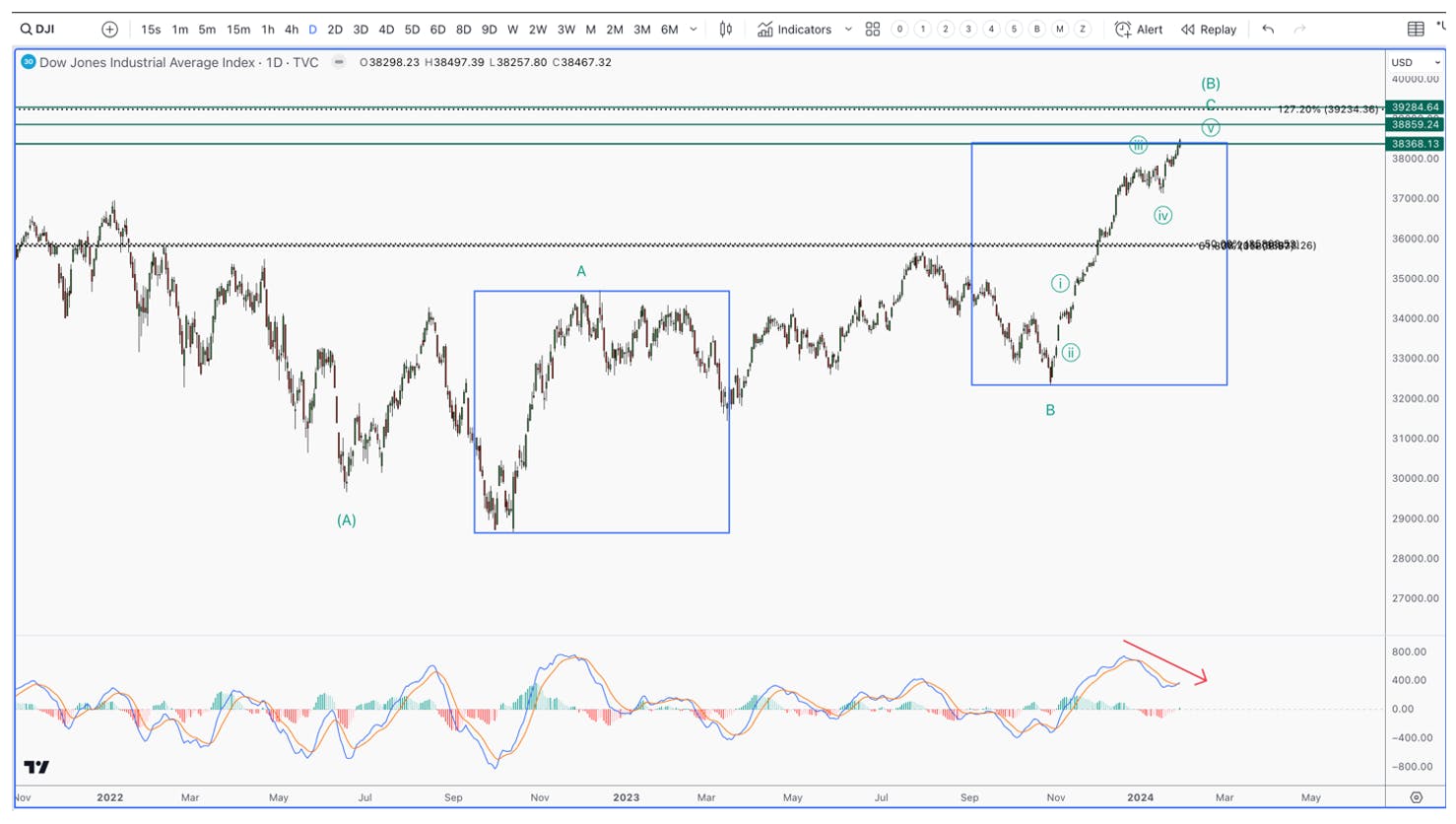
Dow Jones Industrial Average (DJI)
DJI appears to be in a complex correction that is taking us to new highs. If accurate, once complete, we should see a 5 wave drop that eventually retraces all of the 2023 rally. The current pattern is in the form of a 5-wave move, which has all 5 waves intact. The question is how much farther can this last swing extend?
German Dax
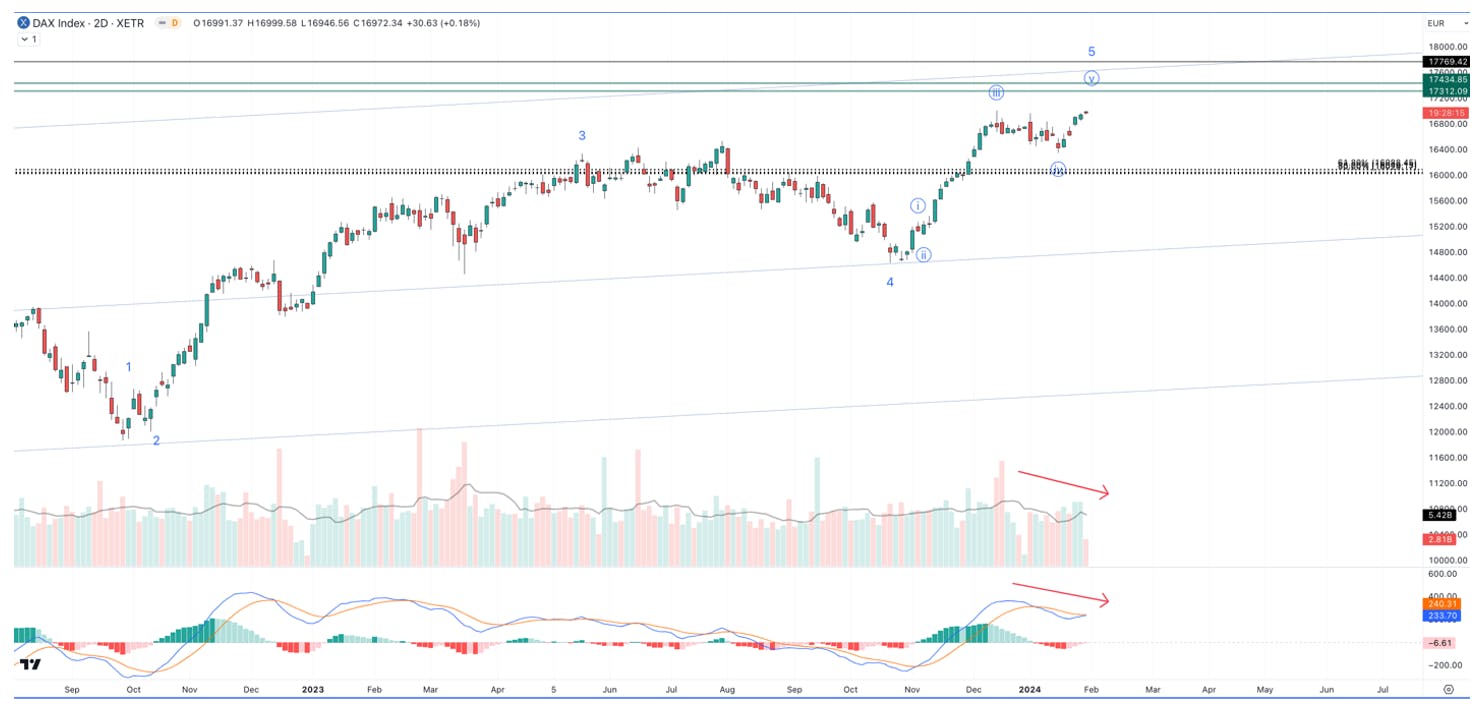
The DAX, which has a history of leading the U.S. markets, also looks like it is in the process of working through the final 5th wave swing to complete the larger uptrend pattern. Note how price is making a higher high on lower volume and momentum. This is classic 5th wave behavior – peak volume and momentum tends to happen on the vertical 3rd wave, with less participants in the 5th wave. The question now is – how much higher can it go? We technically have all waves in place, so the upside is much more limited when compared with the downside potential from here.
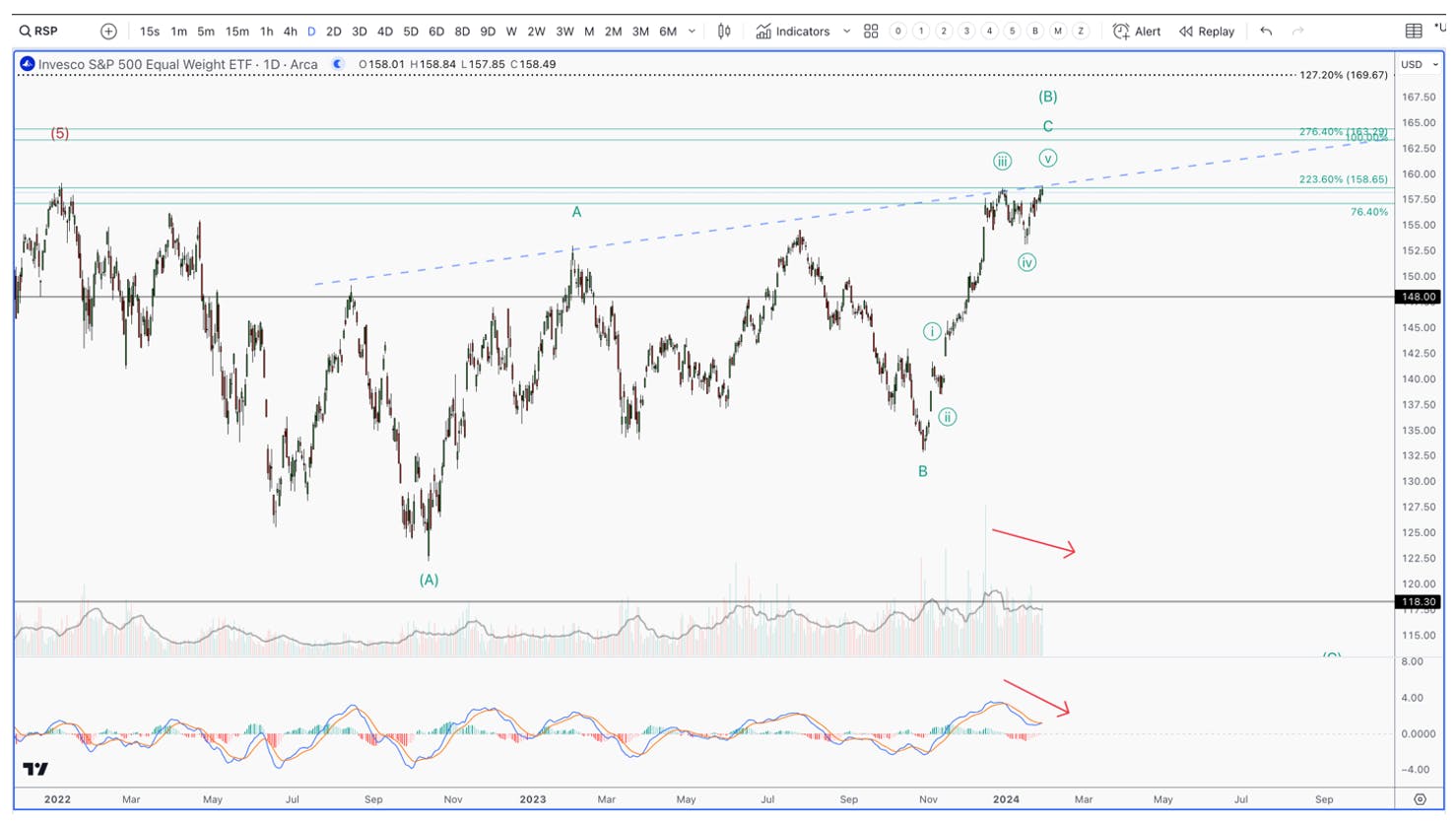
Equal-Weight S&P 500
The Equal Weight S&P 500, which is stripped of tech dominance due to each stock containing equal weighting, looks similar. It needs a 5th wave to complete the larger pattern. If this happens, it will likely be a bull trap for those attempting to buy the breakout to all-time highs.