
Pure Play Tech Stocks to Benefit from IaaS Growth
February 08, 2019

Beth Kindig
Lead Tech Analyst

This is the second article in a 2-part series. The first article “Best Bet for Growth Stocks in 2019? Secular IaaS.” can be accessed here.
One reason for Microsoft’s success with growth rates of 76% in the last two quarters is the company’s hybrid approach. This approach helps customers keep their most sensitive data on their own servers while sending workloads that have advantages as cloud apps, such as real-time data analytics, to Azure. This, in turn, has caused Amazon to chase Microsoft with recent efforts to improve its hybrid solutions.
The Department of Defense is a perfect example of an entity that would want to keep its most secure data with on-premise servers while leveraging the cloud for artificial intelligence and machine learning. Fortune 500 companies with substantial IP are another example of who would require on-premise security.
Understanding hybrid is key because it gives transparency into how companies with big budgets think and how they evaluate the cloud. Security is clearly a concern as on-premise servers continue to be in demand as a counterpart to the public and private cloud. Therefore, small to mid-cap companies which help to make the cloud more secure have room for near-term growth.
Additionally, the strengths and benefits of the public and private cloud include mining data more efficiently and improving accuracy and also productivity. Therefore, any small to mid-cap companies that assist with data insights or improved work flows will have room for near-term growth. For example, SalesForce is a major growth story that came from improving both the accuracy of sales targets and productivity of sales teams.
Below are a few of the more popular stocks in the cloud space. Although it is my belief some of these are overbought, and will have to prove themselves if we do go through a bear market, it most certainly doesn’t hurt to have them on the radar and to look for the right entry point.
- Okta and Zscaler are both in cloud cybersecurity. Okta is in the identity and access management market which secures access to APIs, provides single sign-on, and prevents data breaches by protecting identity credentials through multi-factor authorization.
Zscaler is a “zero trust security architecture” that verifies identification and access. Currently, most companies use a virtual private network (VPN) as a security architecture and Zscaler improves on this by leveraging the cloud rather than physical or virtual appliances.
Risks: One of the greatest risks to these companies is the ongoing competition in cybersecurity. Cybersecurity, in general, is a hard space to create a competitive moat. In Okta’s case, the tech giants can duplicate the majority of these services. An acquisition, especially talent based, would be a good outcome for Okta. In Zscaler’s case, a competitor could come in and create a pricing war. I also noticed recently that insiders of Zscaler have been selling their stock – one at $2.1 million in stock and another at $4.5 million.
- Twilio is a common household name in the San Francisco and Silicon Valley area due to a well-run developer evangelism team. This company was heavily promoted at every developer conference over the last 10 years and you can bet that most of its revenue comes from a very loyal fan base. Twilio’s cloud products are voice-based and SMS/text messaging based, as well as other communication functions through APIs. The translation here is that you can essentially make phone calls and send text messages in the cloud, for instance, like when you call or text through Lyft’s ride share app. Developer-led technologies with strong adoption and loyalty are hard for competitors to shake. In fact, it’s one of the primary key metrics I look for when making tech stock buys.
Risk: There could be a point where artificial intelligence begins to eat into Twilio’s market share. Any manual requests by users or communication done through texting, for instance, will be replaced with highly accurate voice commands. We will speak what we want rather than type what we want. Google, Amazon and Apple are quickly building this out, and the accuracy will be nearly perfect. You can read more on my analysis about the rise of AI assistants here. Twilio has clearly had amazing returns of 335%, so if you got in early, you’re high-flying right now.
My newsletter subscribers get this information first. Sign up here.
- Slack is also a common household name in the San Francisco and Silicon Valley area, and the 8 million subscriber base in 2018 includes 50% global teams in Europe and Asia. Slack is a collaboration hub for work that lets you communicate across multiple team members without having to create long and confusing email threads. There are many productivity features such as sharing files, making calls in-app, and having separate work spaces and threads. Programmers were especially fond of Slack in the beginning and now it’s caught fire across all departments. In fact, I’m currently logged into Slack as I type this communicating with my team.
Risk: Slack filed for an IPO this week, actually. The company is choosing to do a direct listing which introduces risk as the founders and VCs don’t have to wait to cash out of the shares they sell. For obvious reasons, it’s better to have the founding team be in the same sink-or-swim boat as its stock investors (if you don’t believe your company will have returns over the next 6 months, why should I?). Direct listings for buzzy tech IPOs are relatively new, and I’m still a bit weary of them. That point aside, Slack does have serious potential for growth.
- Veeva is disrupting the pharmaceutical and life sciences industries by assisting with sales and operations while meeting health industry regulations. Veeva has a history of being an outlier with no competition to speak of, and is one of the rare companies that was already profitable when it made its public offering in 2013. Today, Veeva is close to securing the fifth spot for a cloud software company to reach $1 billion in revenue. If Veeva does hit TAM, an exit strategy could be a solid acquisition for deep pocketed Walgreens, CVS or Amazon who has big ambitions to get into pharmaceuticals.
Risk: The major risk to Veeva is the current valuation and total addressable market as they are targeting a specific industry. With a PE ratio hovering around 100 and price to sales of 19, this stock is priced to perfection. Quite a few tech stocks that came of age during the bull streak (for Veeva this was 2013) may have an awakening ahead of them. If there is a good entry point, Veeva’s revenue growth will continue with analysts projecting revenue to “reach just over $2 billion by fiscal 2024.” As an individual investor, I have to make sure the first $1 billion in revenue is priced right with a fair valuation or the second billion in revenue (projected to be five years from now) won’t matter for my returns.
- Workday is a cloud platform that increases productivity across HR and finance. This is done through machine learning, analytics and real-time reporting through a cloud platform. Products include financial management and human capital management. Workday is a large cap company and is ranked as the 27th largest internet company by revenue and is one of the first five cloud software companies to achieve $1 billion in revenue.
Risks: Similar to Veeva, Workday came of age during a raging bull market in 2012 and its valuations reflect this. It saw an 83% increase the day of its public filing and went on a tear in 2017/2018. The 52-week low is $107 and its current price is $186. With a price to sales ratio of 15, and no P/E ratio to speak of, I think we will see a better entry point than where it currently stands.




More To Explore
Newsletter

The Case for Bitcoin to $2 Million After This Bear Market
Our latest analysis lays out how we plan to navigate the rest of this bear cycle, along with the technical roadmap to $2 million — a view further supported by what we're seeing across the U.S. dollar,

Is the AI Dip a Buy? Key S&P 500 Levels and the One Bond Market Line to Watch
In our last broad market report on June 18th, we presented a case for caution, presenting numerous warning signs that we tend to see before a correction, ranging from institutional positioning to nume
Big Tech’s AI Revenue Is Surging, but Suppliers Will Still Be the Bigger Winners
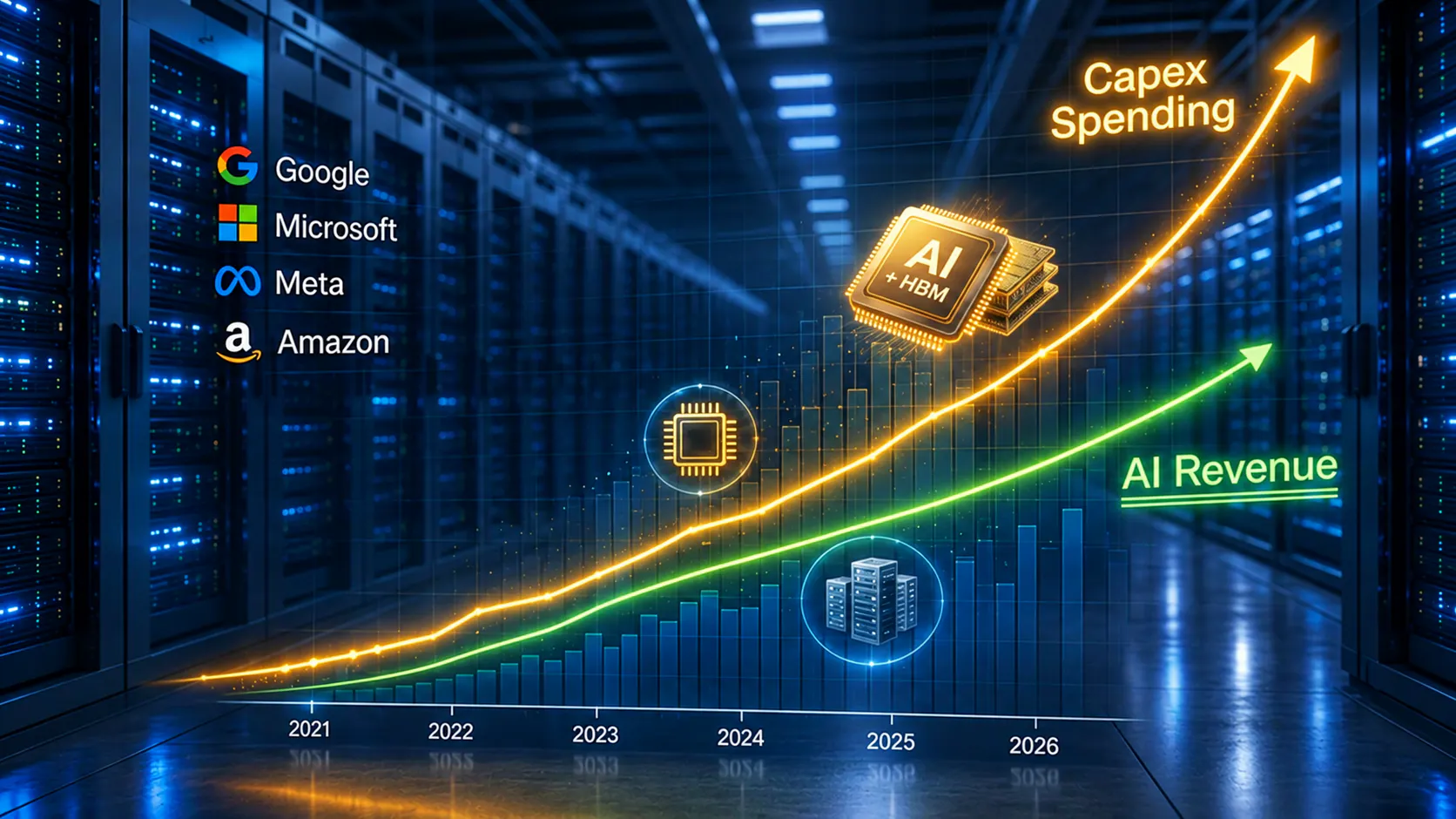
Big Tech’s AI Capex has stomped estimates for multiple years and analysts are now calling for capex to surge to $1 trillion in 2027. However, hyperscalers have long battled investor concerns around wh
AI Capex to Hit $1 Trillion – And Estimates Are Still Too Low
Big Tech capex is the driving force behind the AI infrastructure trade, yet Wall Street has repeatedly underestimated the sheer scale of the buildout. Currently, in 2026, the guidance for $732.5 billi
Token Growth is Surging - Here Are the Beneficiaries
The reality of AI demand growth has shattered early estimates for token processing, yet expectations continue moving up and to the right. In the second installment of our token processing series, we e
AI Token Demand is Shattering Forecasts
Total annual token processing is no longer measured in billions or trillions of tokens, but in the quadrillions and beyond. As annual token processing is now tracked in units with 15 trailing zeros, i

Nvidia and Google Are Crowding TSMC’s N3 Node - Can Intel Fill the Gap?
Nvidia is moving its next-generation Rubin GPUs from 4nm to 3nm, yet Google’s latest TPUs are already on N3 and are expected to remain there. Meanwhile, a growing number of AI CPUs from Nvidia, Amazon

Intel vs TSMC: How CoWoS Packaging Constraints Could Create an Opportunity for Intel Foundry
Taiwan Semiconductor (TSMC) is the single, most important company to the AI industry. However, to compete with the incumbent, Intel does not need to beat TSMC at leading-edge manufacturing. It only ne

Big Tech’s Free Cash Flow is Turning Negative – Who's Next?
Big Tech’s AI revenue is accelerating, but free cash flow is moving sharply in the opposite direction. Across Google, Microsoft, Meta and Amazon, capex is rising much faster than operating cash flow a
Big Tech Earnings Preview: Is AI Monetization Finally Catching Up to Capex?
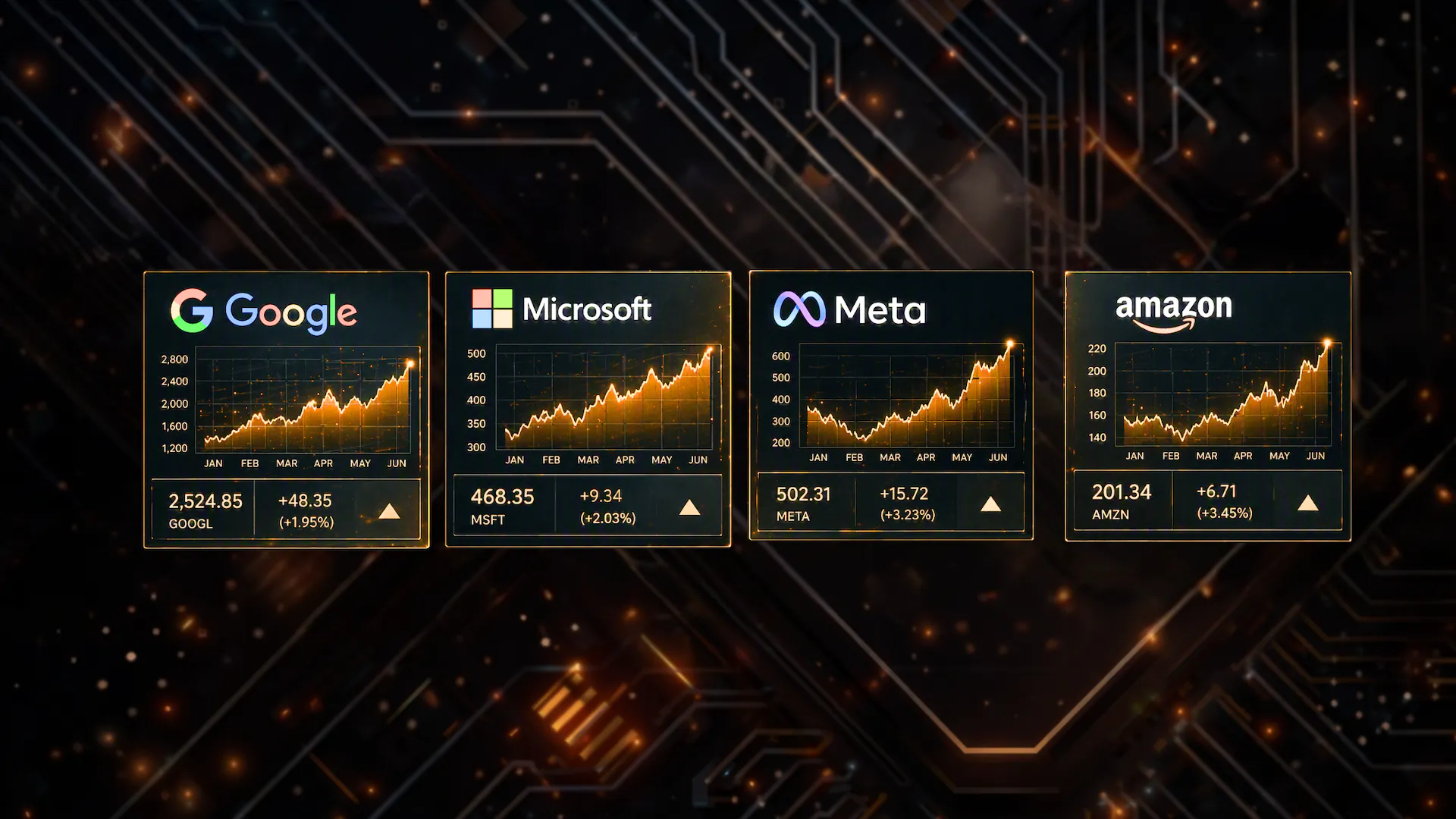
The most pronounced difference between 2026’s tech rally compared to rallies in the past is which companies have been left out of it. The names most associated with the AI trade have hardly participat