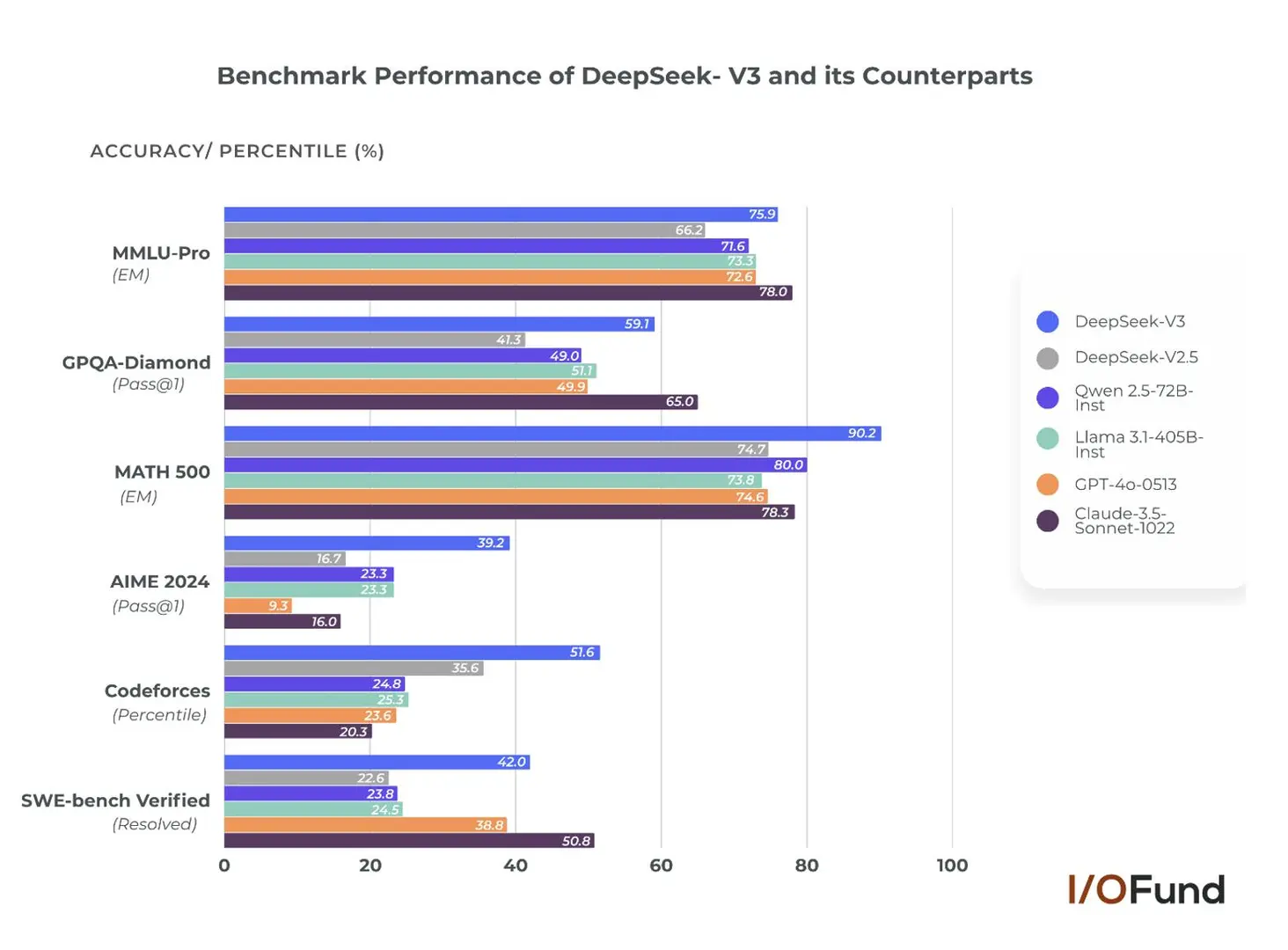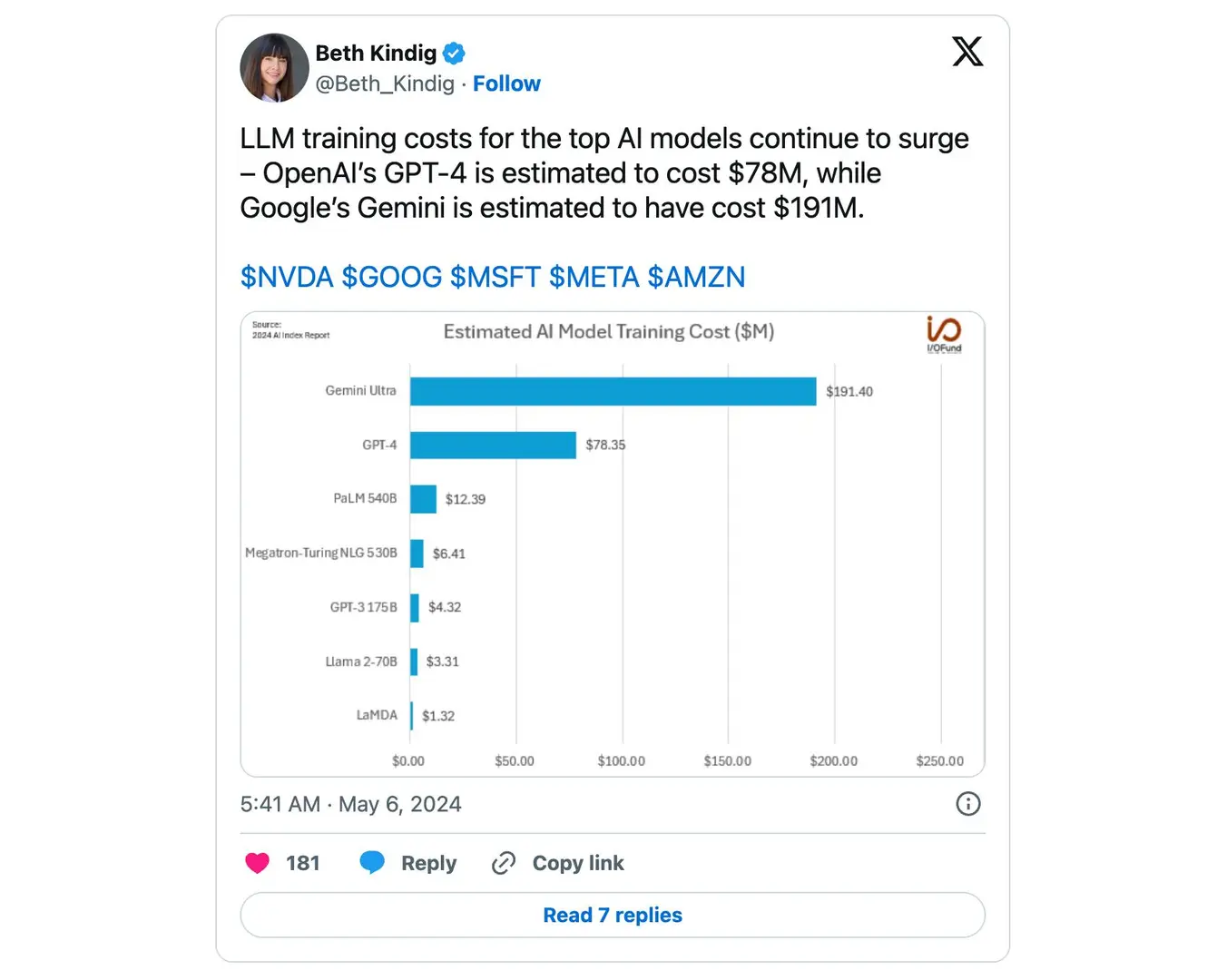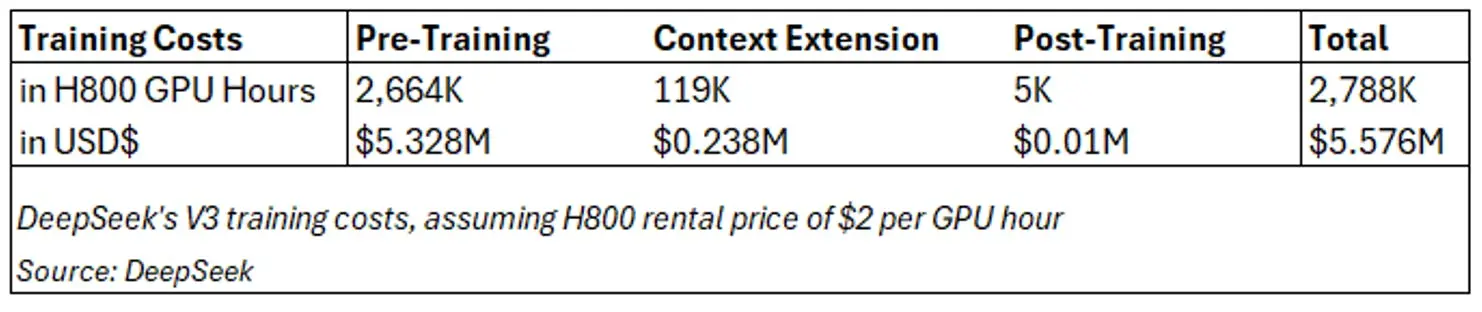

DeepSeek caused a deep rout in AI stocks earlier this week with Nvidia erasing more than $600 billion in value; the biggest one-day loss of any company in history. The R&D company out of China stated the model cost $6 million to train, which sent the market into a panic as this is pennies to the dollar compared to what Big Tech is spending. The jerk-reaction readthrough was that, in the blink of an eye, DeepSeek had fundamentally rewritten the AI capex story.
The battle between the United States and China on large language models (LLMs) following DeepSeek’s challenge to OpenAI has been called AI’s Sputnik moment. The most important takeaway for investors about this analogy is that Sputnik spurred massive investments. It was not the final destination, rather, it was the beginning of a multi-decade space race. The Sputnik satellite cost $15 to $20 million or $33 million with cost-adjusted inflation, yet the United States would spend an estimated $1 trillion over a sixty year period in response.
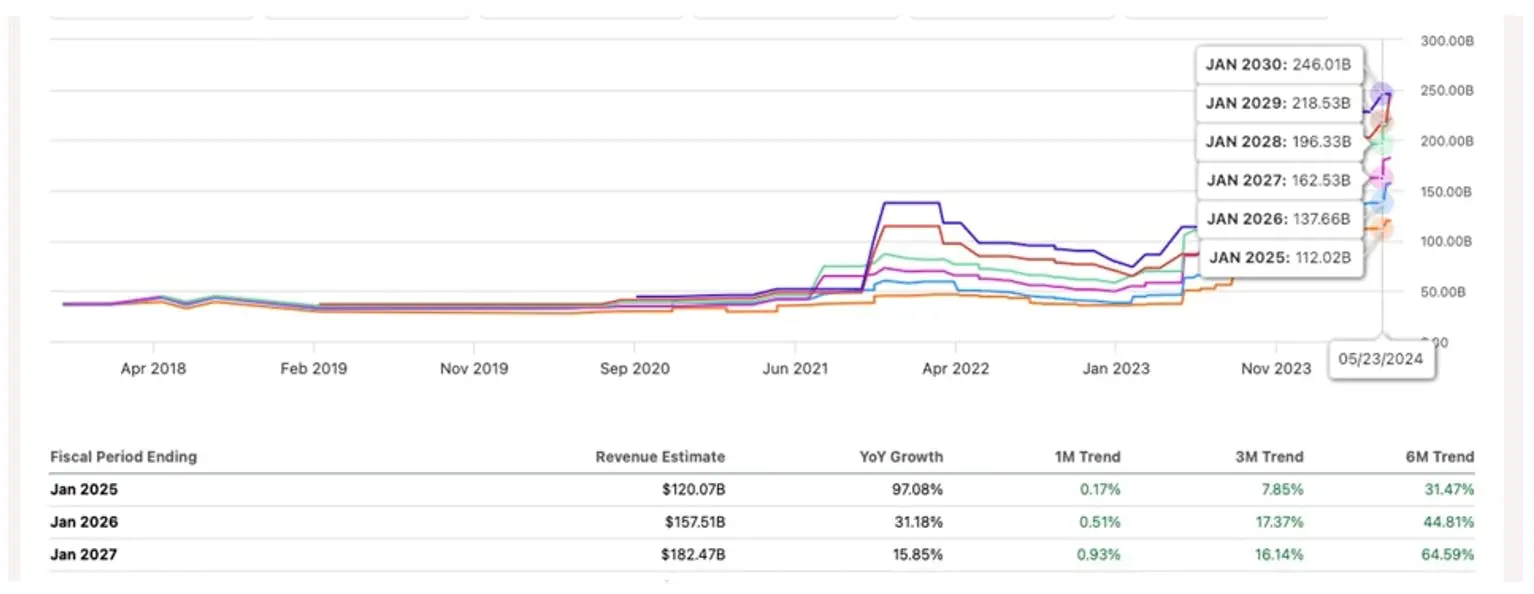
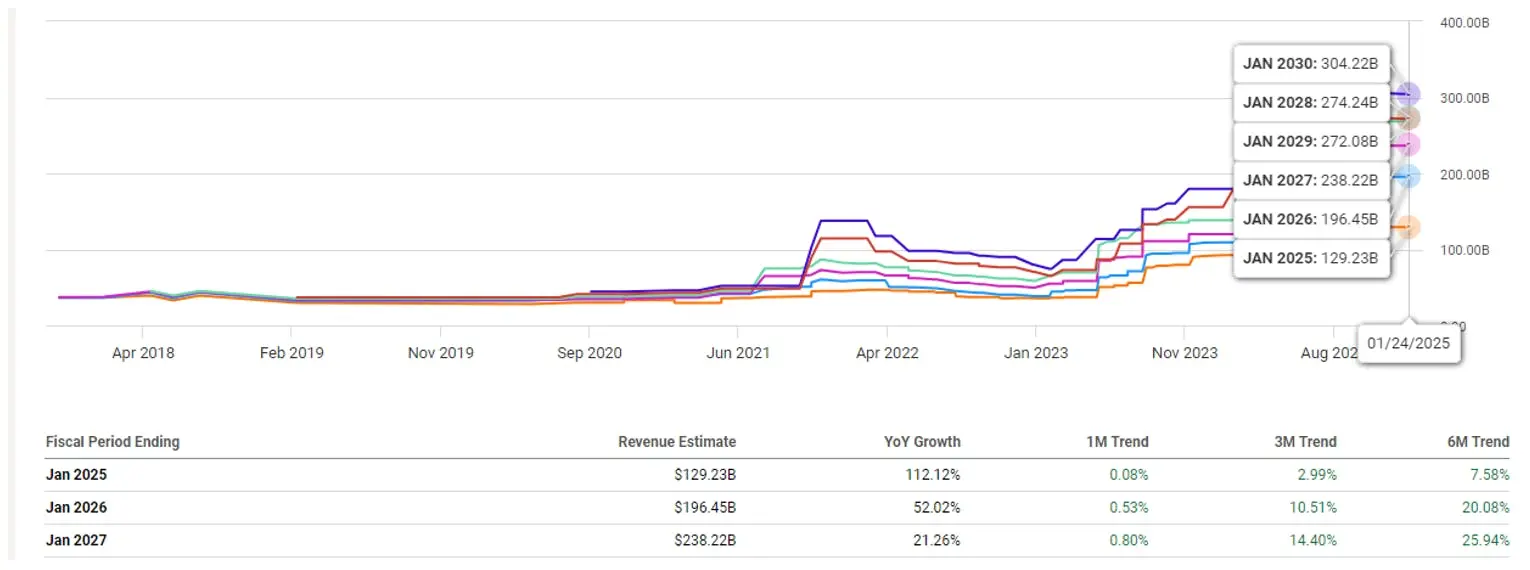
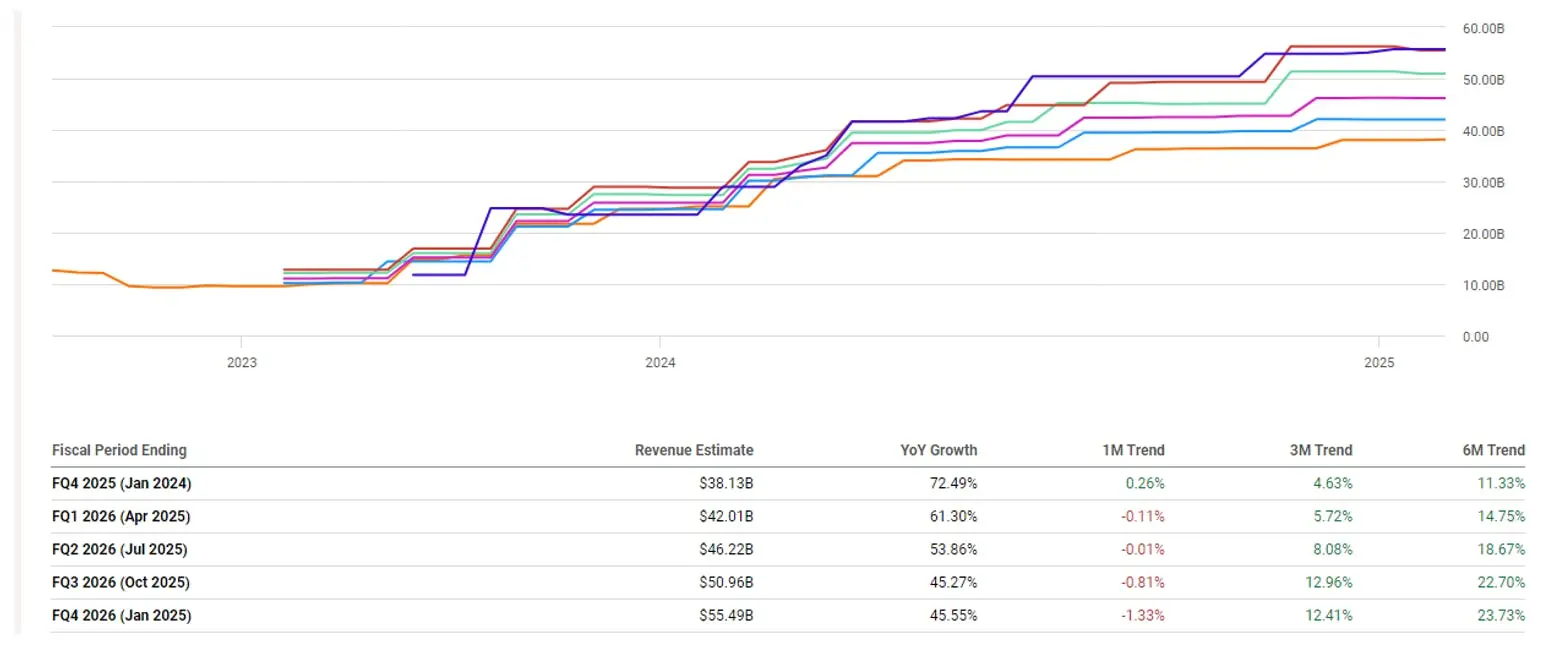
The United States takes it quite seriously to stay in the lead, and AI will spur an arms race unlike anything the world has seen before. Consider that it took sixty years for the government to spend $1 trillion (inflation adjusted) on the space race, yet in one sweeping piece of legislation, the United States will spend $500 billion in 5 years on AI infrastructure, up from $70 billion being spent in 2024 alone.
Remember, it was the market’s so-called “efficiency” that caused Nvidia’s stock to drop 60% from a gaming-related miss following rumors that Ethereum’s merge to Proof-of-Stake (PoS) would be the death knell for the stock. This was the very moment the powerful AI GPUs called Hopper were shipping, equipped with a Transformer Engine that would enable self-learning models, and change the world as we know it.
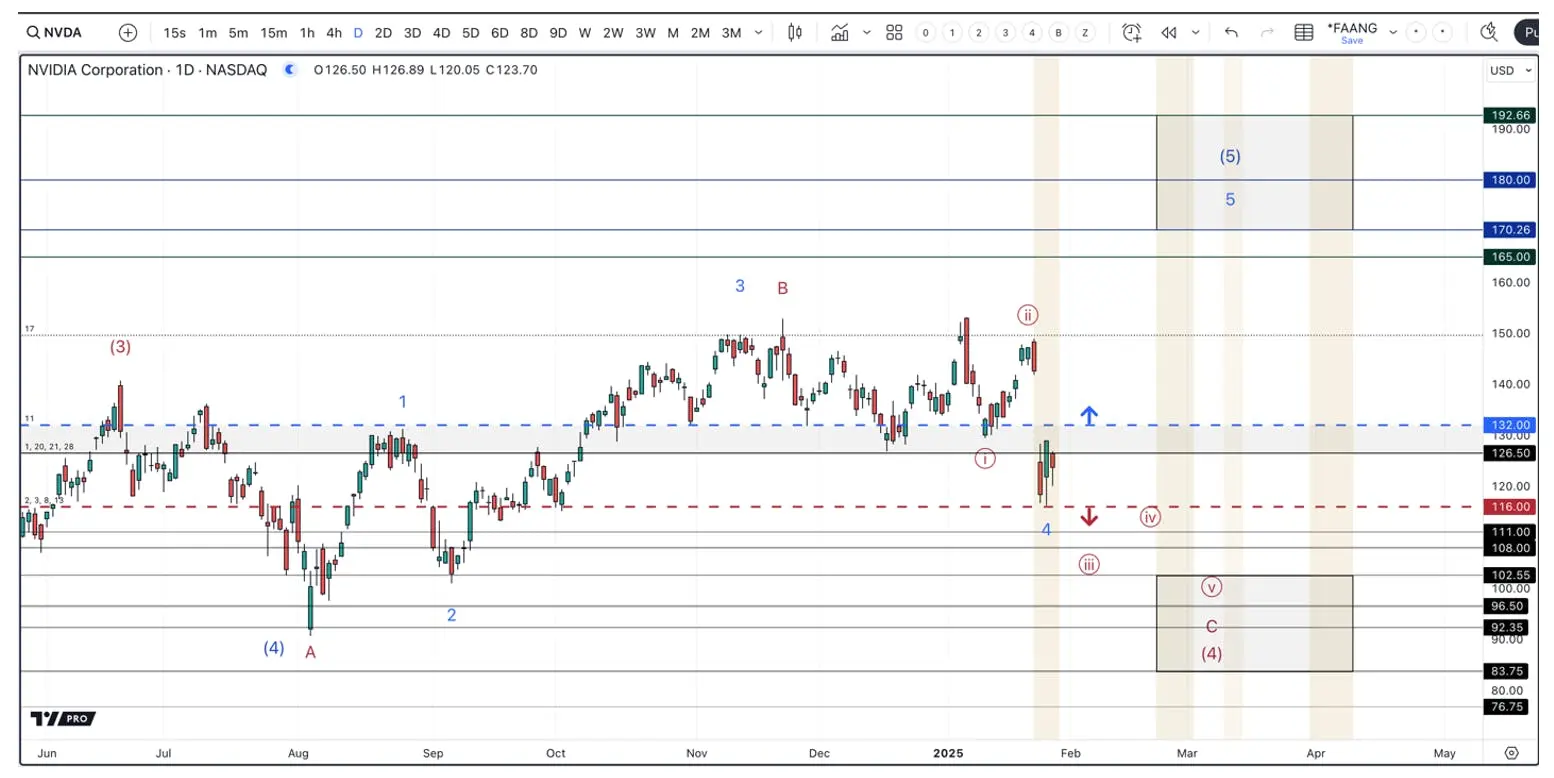
Tech is defined by disruption, by thousands of product announcements, and by leagues of competitors. It can be a noisy and costly sector when investors get whiplashed by the news of the day. My firm has an enviable track record on Nvidia – including speaking out during staggering selloffs or supply chain rumors. This includes also telling you when we are not buying, or when a stock is frothy, such as when Nvidia was trading in the $140s. We also go to great lengths to tell you when we plan to buy again. You will find dozens (perhaps hundreds) of articles on DeepSeek at this point; yet you will be hard pressed to find one other person helping investors navigate Nvidia’s stock at this granular level.
Below, I provide evidence that DeepSeek is not the black swan that killed Nvidia overnight – in fact, driving down the costs of AI development has always been the plan — and will ultimately boost Nvidia’s sales in the long run as AI will leave the data center, and move on-premise for enterprises and on-device for consumers.
I also touch base on what investors should keep an eye on price-wise moving forward for the GPU juggernaut.
DeepSeek’s DualPipe Algorithm
DeepSeek’s DualPipe Algorithm optimized pipeline parallelism, which essentially reduces inefficiencies in how GPU nodes communicate and how mixture of experts (MoE) is leveraged. MoE refers to distributing a computational load across “multiple experts” (or neural networks) to train across thousands of GPUs using what is called model and pipeline parallelism. This enables more compute-efficient training yet the parameters still need to be loaded in VRAM, so the memory requirements remain high.
Tom’s Hardware wrote an article about this a month ago, with an usually prescient title: “Chinese AI company says breakthroughs enabled creating a leading-edge AI model with 11X less compute — DeepSeek’s optimizations could highlight limits of US sanctions.” The article stated: “The DualPipe algorithm minimized training bottlenecks, particularly for the cross-node expert parallelism required by the MoE architecture, and this optimization allowed the cluster to process 14.8 trillion tokens during pre-training with near-zero communication overhead.”
By allowing the routing of tokens to experts and the aggregation of results to be handled in parallel through code called PTX (Parallel Thread Execution), DualPipe helped to drive down costs. The software essentially optimized the hardware. The company also created a 4-node maximum to limit nodes and reduce traffic, allowing for a more efficient communication framework.
MoE models like DeepSeek’s can provide numerous benefits, and this is what DeepSeek is showing – an ability to train larger models at a lower cost with much faster pre-training, faster inference, and an ability to deliver decreased first-token latency. However, MoE also can require higher VRAM to store all experts simultaneously and can face challenges in fine-tuning.
Mixed Point Precision and Multi-Head Latent Attention Lowers Memory Usage
DeepSeek’s success is also found in lowering memory usage with multi-head latent attention that lowered memory usage to 5% to 13%. MLA ultimately reduces memory requirements during inference by processing long sequences of text. As pointed out by ML Engineer Zain ul Abideen, “MLA achieves superior performance than MHA, as well as significantly reduces KV-cache boosting inference efficiency.”
It has been estimated that HBM3e’s component costs in Hopper GPUs could be as much as 25% higher than HBM3-equipped GPUs, and it’s expected HBM4 will add more costs due to the complexities of delivering faster data rates.
Memory is an expensive component and Hopper is known for its limited memory capacity at 80GB of HBM3e memory versus Blackwell’s 192GB of HBM3e (nearly 2.5X the memory in the upcoming release). Therefore, reducing memory usage is one path to optimizing Hopper GPUs.
DeepSeek’s success also stemmed from its pioneering approach to model architecture. The company introduced a novel MLA (multi-head latent attention) method that lowers memory usage to just 5%–13% of what the more common MHA architecture consumes.
Nvidia’s hardware excellence stands out in the Hopper generation of GPUs with the Transformer Engine. Two years ago, Hopper’s transformer engine brought about Chat-GPT’s big moment as the OpenAI model eliminated the need to find patterns between elements mathematically, and this opens up which datasets can be used and how quickly.
The H100s also leverage the transformer engine for mixed precision, such as FP8, FP16 or FP32, depending on the workload. Nvidia architected the ability to switch between floating precision points in order to require less memory usage. Here is what Nvidia states:
“There are numerous benefits to using numerical formats with lower precision than 32-bit floating point. First, they require less memory, enabling the training and deployment of larger neural networks. Second, they require less memory bandwidth which speeds up data transfer operations. Third, math operations run much faster in reduced precision, especially on GPUs with Tensor Core support for that precision. Mixed precision training achieves all these benefits while ensuring that no task-specific accuracy is lost compared to full precision training. It does so by identifying the steps that require full precision and using 32-bit floating point for only those steps while using 16-bit floating point everywhere else.”
DeepSeek says that FP8 allowed it to “achieve both accelerated training and reduced GPU memory usage,” as it validated FP8’s usage for training large scale models for a fraction of the cost. A majority of the “most compute-density operations are conducted in FP8, while a few key operations are strategically maintained in their original data formats,” such as those that require higher precision due to sensitivity reasons.
Though lower-precision training has often been “limited by the presence of outliers in activations, weights, and gradients,” and tests have shown that FP8 training was prone to higher instability and more frequent loss spikes, it is now emerging as a solution for efficient training due to hardware advancements (i.e., Hopper bringing powerful FP8 support, Blackwell bringing FP4).
DeepSeek also provided recommendations for future chips to accommodate low-precision training and replicate this at scale, suggesting chip designs should “increase accumulation precision in Tensor Cores to support full-precision accumulation, or select an appropriate accumulation bit-width according to the accuracy requirements of training and inference algorithms.”
This is what Blackwell was designed to address, with new precisions in Tensor Cores, FP4 precision, increased SM count, and more CUDA cores versus the Hopper. Blackwell also packs 208 billion transistors to provide up to 20 petaflops of FP4, compared to the H100’s 4 petaflops of FP8. The B200 features a second-generation transformer engine supporting 4-bit floating point (FP4), with the goal of doubling the performance and size of models the memory can support while maintaining accuracy.
To simply recreate DeepSeek’s training efficiencies and develop large-scale models, Hopper GPUs are a requirement due to support for FP8, with Blackwell bringing FP4 to power real-time inference and supercharged training for trillion parameter models.
Understanding the nuances of Nvidia’s hardware is the reason that I first called out Nvidia’s AI GPU thesis and CUDA moat in late 2018, and in 2019, Volta’s AI capabilities prompted me to say on my premium stock research site: “I believe Nvidia will be one of the world’s most valuable companies by 2030.” This has led to potential gains of over 4,000% for our free readers.
Blackwell is Not Hopper
This may seem like a moment where AI software is triumphant, yet we are at the end of the Hopper generation with the H100s (and the more restricted H800) GPUs being available for two years now. Two years is eternity in the AI arms race, and the fact Hopper is reaching a point of peak optimization at the very moment that Blackwell is shipping is not a shocking new revelation — rather, it’s the point of keeping a fast-paced product road map. Per Nvidia’s Computex keynote, from Pascal to Blackwell, their AI systems will deliver “1,000 times increase in AI compute,” while simultaneously decreasing the “energy per token by 45,000X.
Therefore, the market is a bit confused to think the 11X increase in compute from software optimizations is going to catch Nvidia off guard. Below are the stated differences between the H100 and GB200 NVL72 systems on Mixture of Experts (MoE) real-time throughput and training speeds.
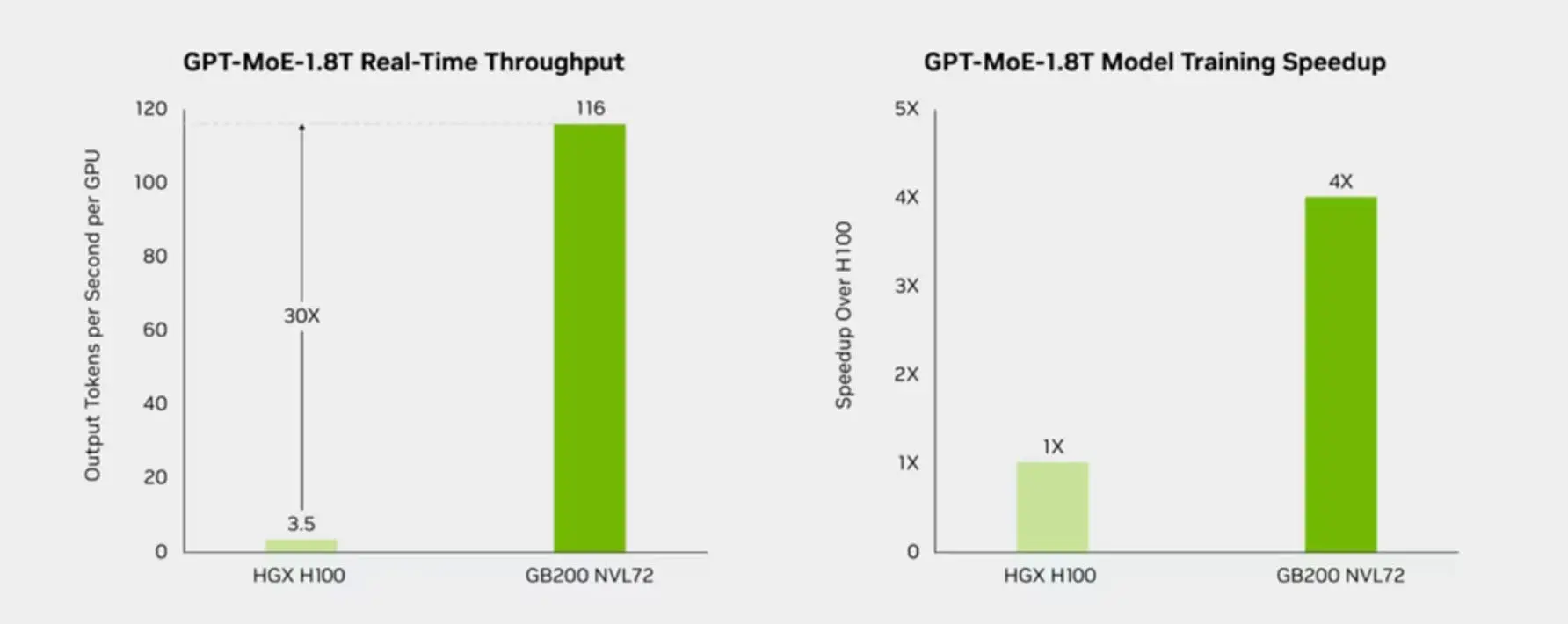
DeepSeek acquiesced the limitations they faced in deploying the model is “expected to be naturally addressed with the development of more advanced hardware.” Note, they are not saying with the development of more advanced software.
I made the point nearly a year ago that Nvidia is competing with Nvidia with its one-year product release road map stating: “The product road map is the single most important thing investors should be focused on. A good chunk of the AI accelerator story is understood at this point. What is not understood is how aggressive Nvidia is becoming by speeding up to a one-year release cycle for its next generation of GPUs instead of a two-year release cycle.”
In addition, by open sourcing the model, there will be more developers who can build new AI capabilities. As stated in a Predibase analysis, there were 500 derivative models of DeepSeek created in a few days’ time.
Nvidia has been early to this eventual outcome with the launch of Project Digits, a $3,000 supercomputer that can run 200B-parameter models. By releasing powerful personal computers, Nvidia seeks the proliferation of its GPUs – much like Apple’s iPhone — whereas companies like OpenAI are the ones most challenged by an open source LLM that drives down input token and output token costs that are 27X less expensive than OpenAI’s o1 model.
Blackwell Inches United States Toward General Artificial Intelligence (AGI)
The reason that software has not officially begun to commoditize hardware, and we could be as far as 5-10 years away from this moment, is because AI development is incredibly nascent. Blackwell and future generations of GPUs are a necessity for AI development to inch closer to the start of general artificial intelligence (AGI).
There have been discussions questioning if it is possible to reach AGI with reinforcement learning: “artificial general intelligence can be achieved if an agent tries to maximize a reward in a complex environment because the complexity of the environment will force the agent to learn complex abilities like; social intelligence, language, etc.”
Reinforcement learning is an ML method where an agent or model learns to make decisions through interactions in its environment, via rewards or punishments. Agents will interact with the environment, receive a positive or negative reward, and adjust its decisions/actions based on the feedback it has received.
AGI refers to the creation of a machine that is capable of performing intellectual tasks on par with humans, and have the ability to understand, learn and apply knowledge to a wide range of domains. Both RL and AGI involve learning from interactions with the environment, though RL is typically more focused on specific tasks or environments where AGI aims to be ‘all-encompassing.’
If software efficiencies from China are relatable to Sputnik, then the arrival of AGI will be the moment we land on the moon. AGI requires an order of magnitude larger models – minimum 1 trillion, up to 10 trillion or more. Reinforcement learning is certainly a step in the right direction, yet trillion+ parameter models are inevitable – and it’ll require Nvidia and other AI accelerator design companies to get there.