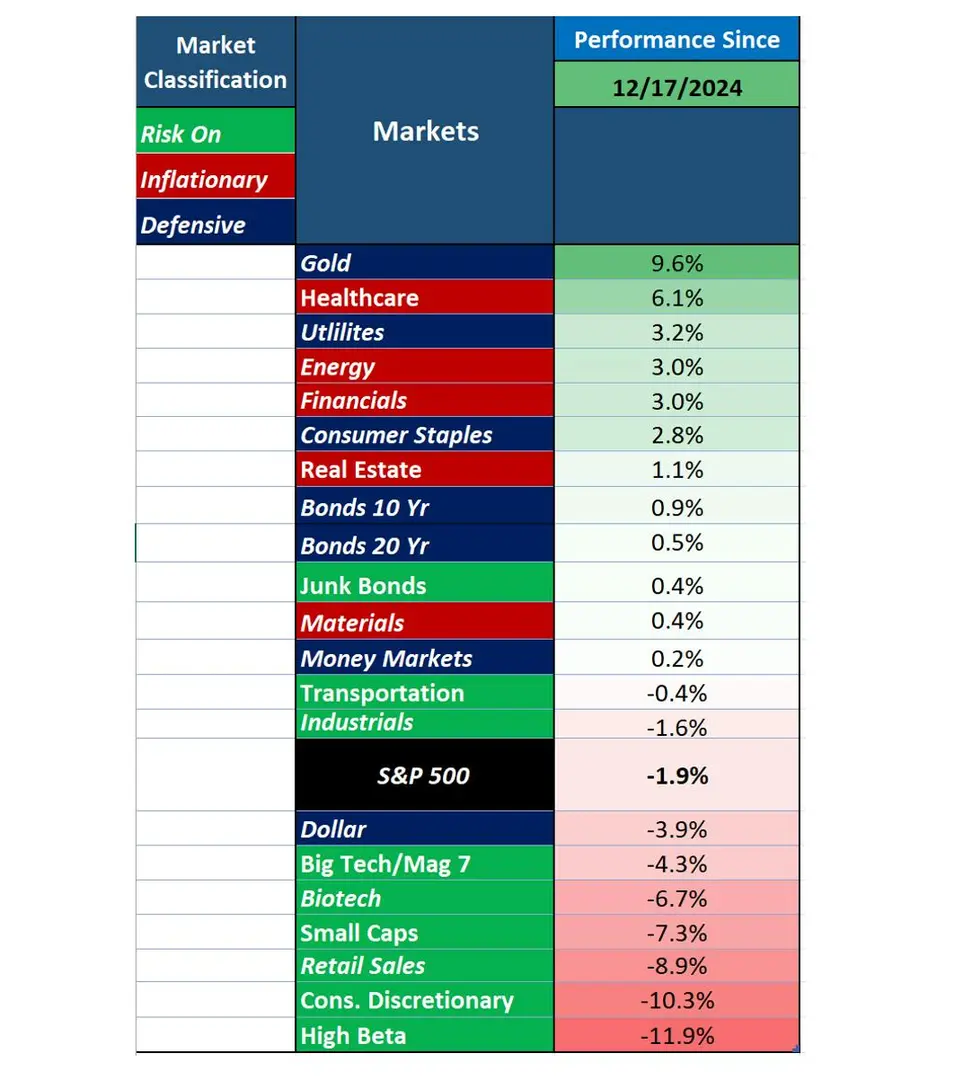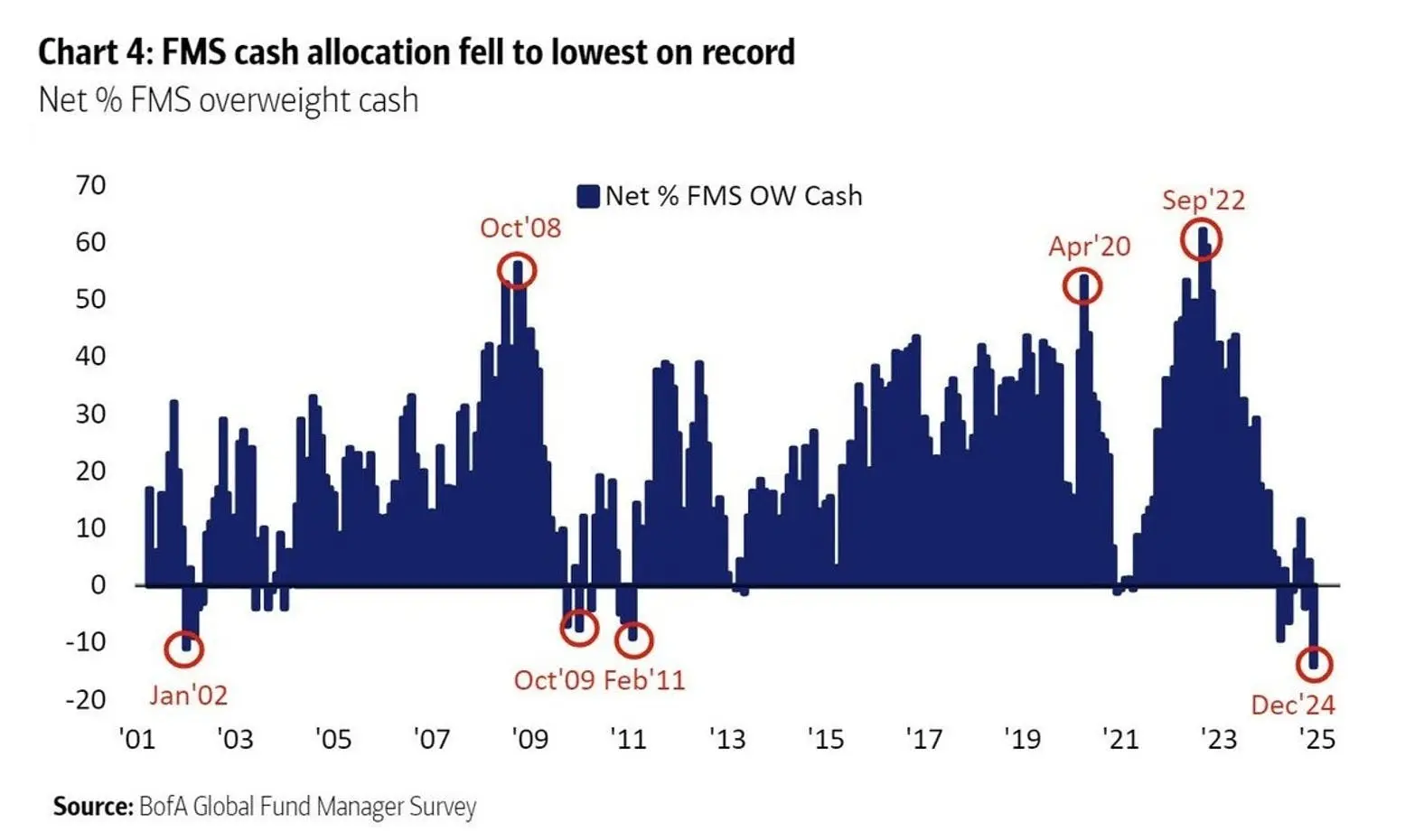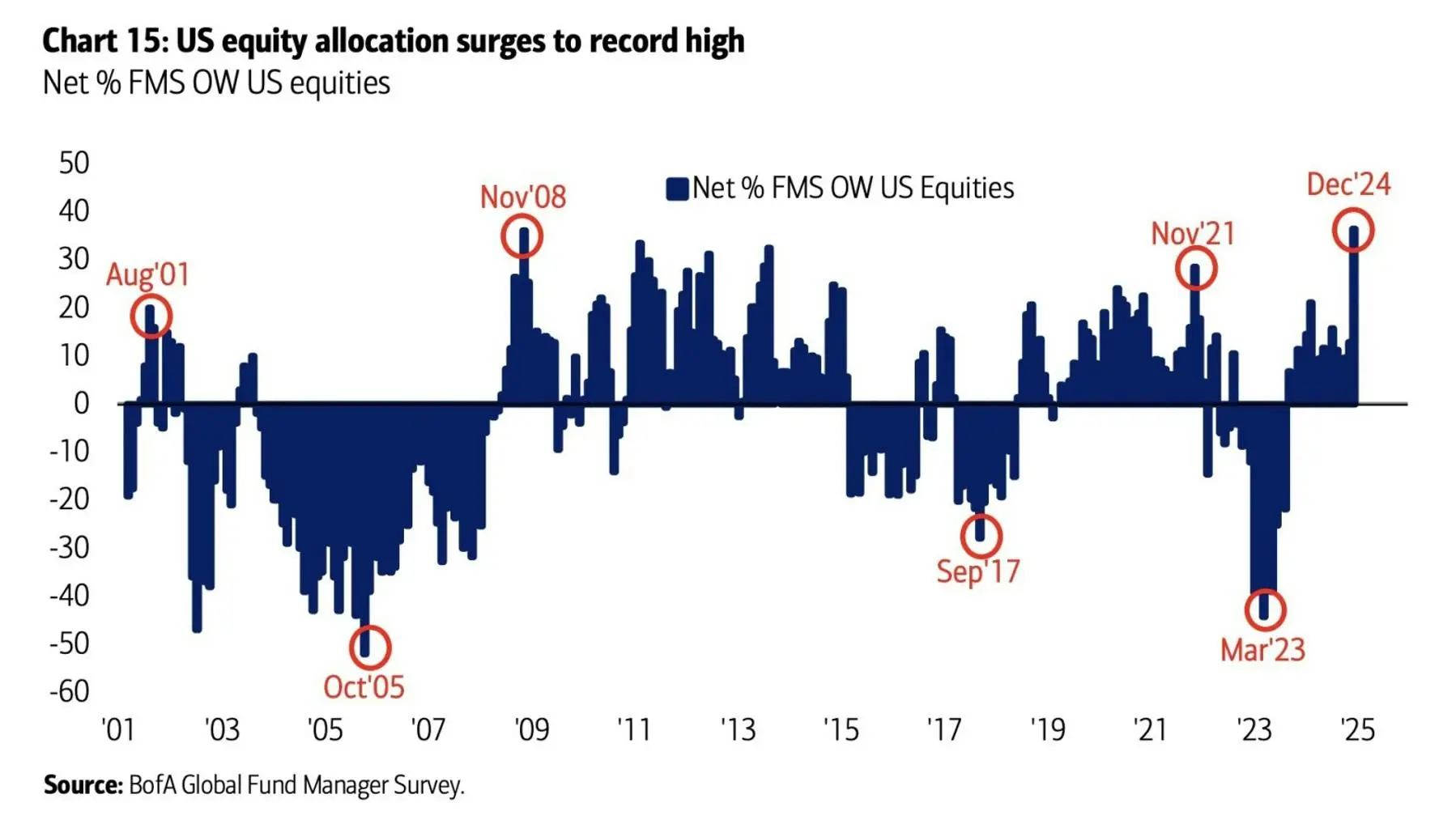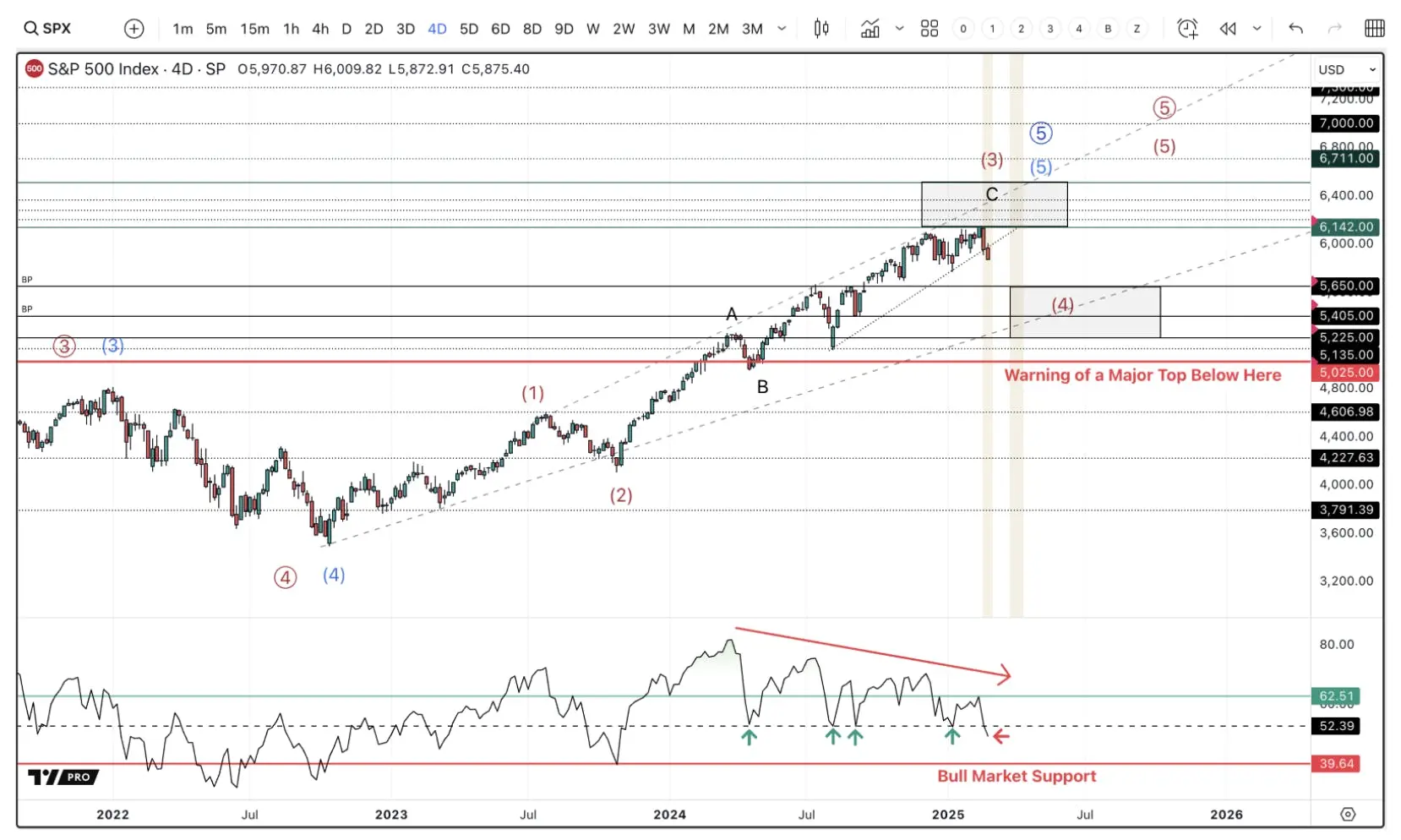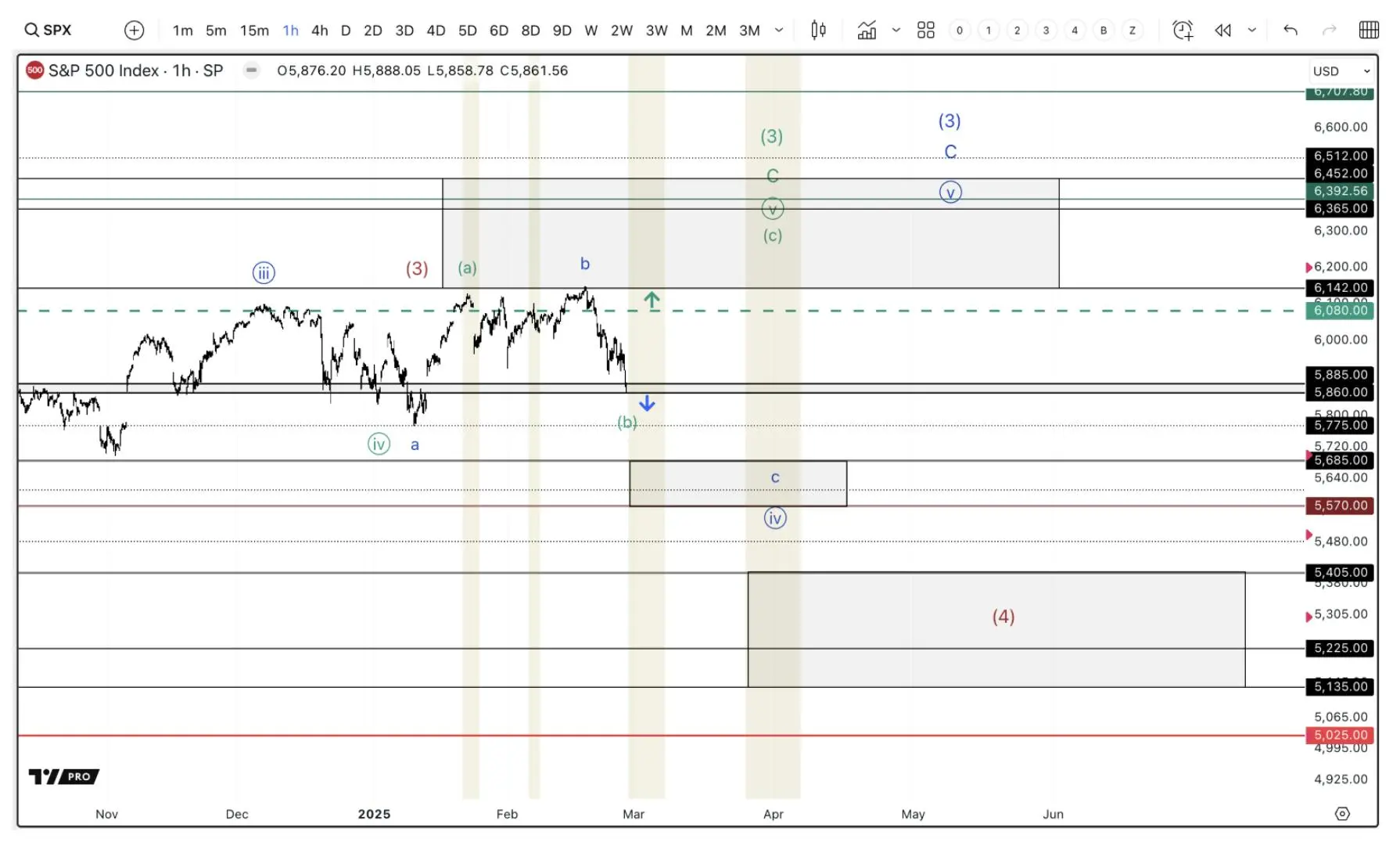


In our last broad market report in mid-October of 2024, we stated that “If the S&P 500 can breakout above 5825, then it can likely push into the 6000 – 6185 region.” This was assuming that we hold support at 5675, which we did. Since then, the market topped at 6147 and is currently trading below where we were in October.
We expressed caution in our October report based on several markets and stocks not participating in the uptrend. We also expressed concerns with the reaction in the bond market regarding the FED’s pivot attempt to aggressively cut rates. These warnings remain today and have only become more concerning.
AI Stocks and Intermarket Analysis: Predicting Market Trends Beyond Economics
In an interview with Barrons in 1988, Stanley Druckenmiller stated, “the only good economist I have found is the stock market. People say it has predicted seven out of the last four recessions. That’s still better than any economist I know.” He further backed this claim up by stating that “One of my strengths over the years was having deep respect for the markets and using the markets to predict the economy and particularly using internal groups within the market to make predictions.”
This same sentiment was also expressed by famed fund manager, Peter Lynch, when he claimed that no one was able to predict the 1982 recession, which, at the time, was the worst recession since the great depression. He then stated, “…if you spend 13 minutes a year on economics, you’ve wasted 10 minutes.”
Both investors are considered market wizards, and both investors analyzed the markets, not the economy, when trying to get ahead of broad market moves. This type of analysis is known as intermarket analysis and, unlike economics, looks at what is going on right now instead of looking back at what already happened or trying to predict too far into the future what will happen.
This type of analysis is what we used on our October 20th 2022 report, to position for the end of the bear market. In this report, we stated…
“We are seeing multiple key sectors within the U.S. not follow the S&P 500 down to a new low last week. Transportation stocks, High Beta and Small Caps have been leading the markets since 2021, and last week, when the S&P 500 made a new low, these risk-on markets made a new high. These types of patterns tend to signal a trend change is brewing.”
We are now seeing the same patterns; however, instead of marking a bottom, they appear to be marking some sort of top.
When all markets, especially the ones sensitive to the economy are trending higher together, you are in a powerful uptrend that should last for a while. On the other hand, when these same sensitive sectors are not moving higher with the broad market, it tends to signal a warning.
AI Stocks and Semiconductors: Key Signals for Market Trends and Volatility
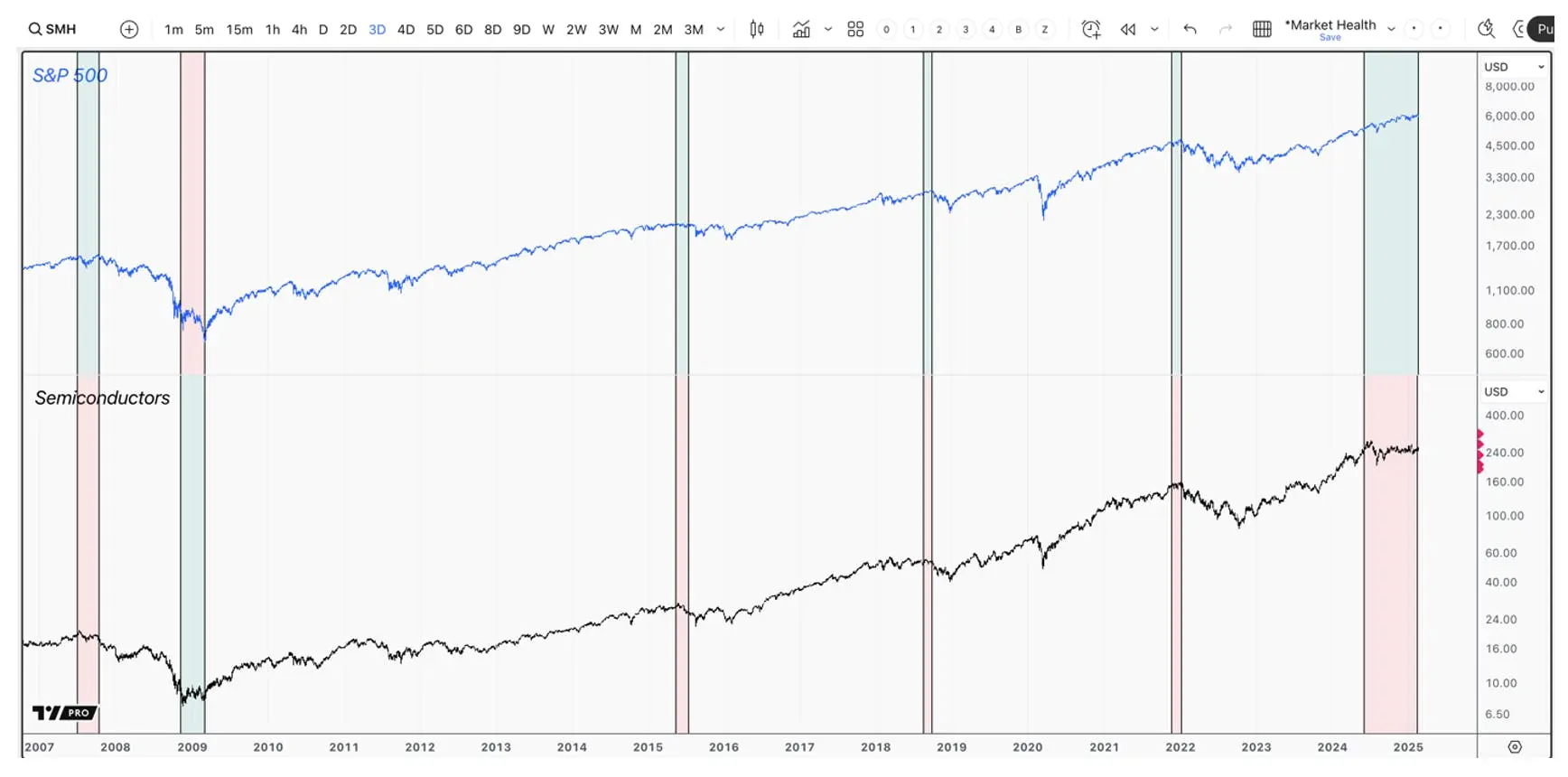
Semiconductor stocks have a long and reliable history of leading market volatility. Historically, this sector tends to be more economically sensitive, showing strong uptrends during economic expansions, as they make the key building blocks of enterprise and consumer technology. They tend to be more economically sensitive and can provide a long lead time between warning investors, and the broad market finally getting the message. Since the 2007 top, semis have provided advanced warnings of notable market turns, including the 2009 bottom, 2015 top, 2018 top, and 2022 top.
In this cycle, we are a handful of semiconductor stocks are the primary recipients of the AI Capex cycle, which has reach nearly $250 Billion from 2023 – 2024, and expected to be $331.5 Billion by the end of this year. This is being fueled predominantly by the capex budgets of four companies – AMZN, MSFT, GOOGL, META.
Considering the importance of AI within this bull market, this sector holds an outsized level of importance. SMH peaked in July of 2024, which we pointed out in prior reports. Interestingly, it is still -14% below it 2024 top, marking one of the longest divergences on record. Like with the above markets, for a meaningful uptrend to resume, we need to see a push to all-time highs. Until this happens, like other periods of volatility, semis could be warning us of market weakness ahead.
The Mag 7’s AI Stocks Diverging
The Mag 7 have been leading this market higher since 2023. Fueled by large Capex spend from Microsoft, Google, Meta and Amazon; their goal, which has been stated on numerous earnings calls, is to be first to market with AI infrastructure and large language models. These companies have repeatedly stated that the risk of underinvesting in AI outweighs the risks of overinvesting in AI.
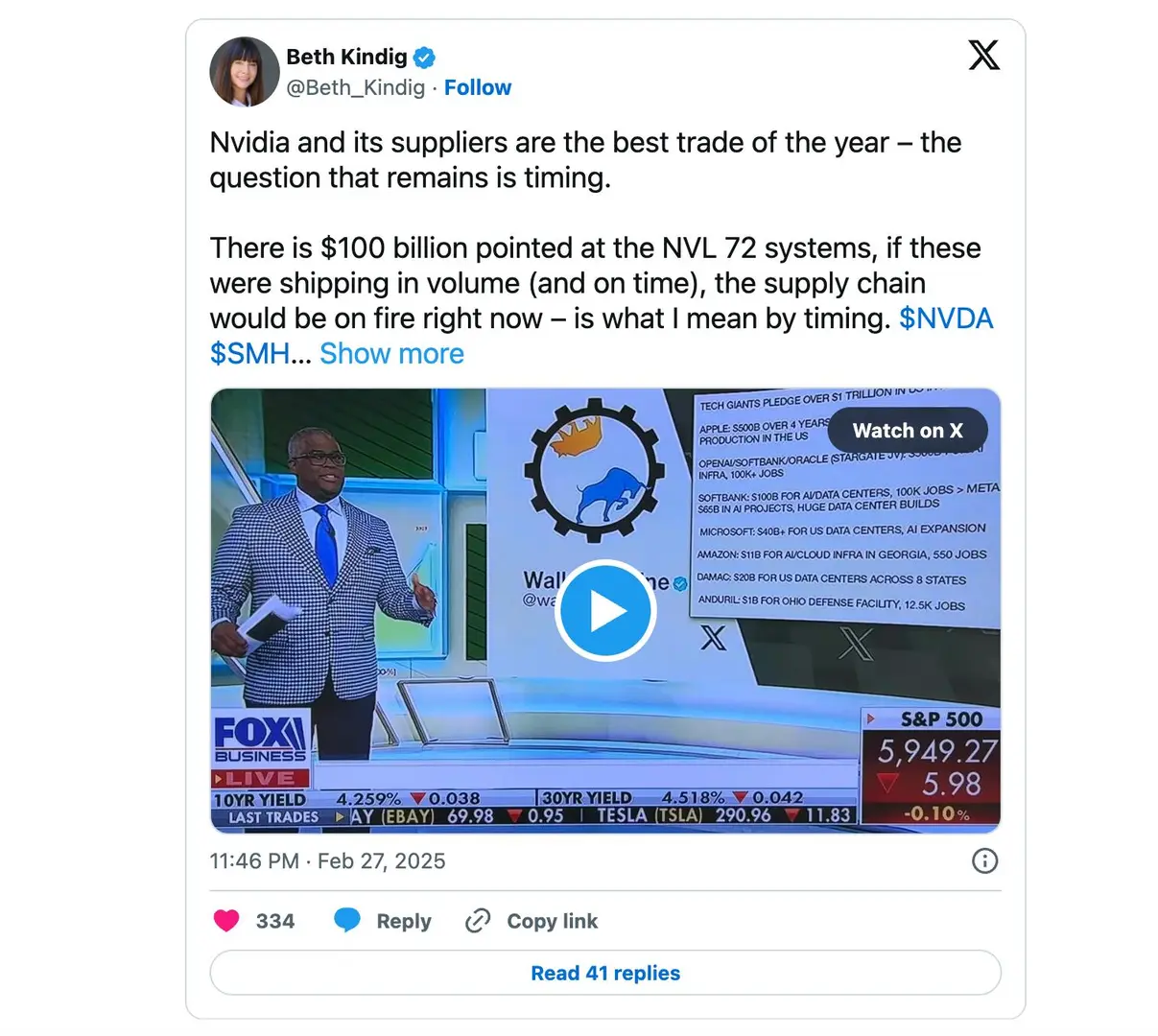
The roughly $300 billion in capex this year is pointed at a handful of stocks that design AI accelerators, and also those that supply necessary components for large AI systems to scale out and scale up. Nvidia is clearly the primary beneficiary.
The seven stocks that have benefited from the AI trend are NVDA, MSFT, AAPL, AMZN, GOOGL, META, TSLA, and are the undoubted leaders of the current bull market, retuning an average of 128% vs. the S&P 500’s 62% since the October 2022 low.
However, these market leaders are giving off a rare divergence that we have only seen three other times since 2018. While the S&P 500 made a new high on February 19th, the MAG 7 did not. In fact, the collective Mag 7 topped on December 17th, and have since made a series of lower highs. Every time we have since these stocks collectively diverge from the broad market, since 2018, it has led to a greater than 10% drop in equities.
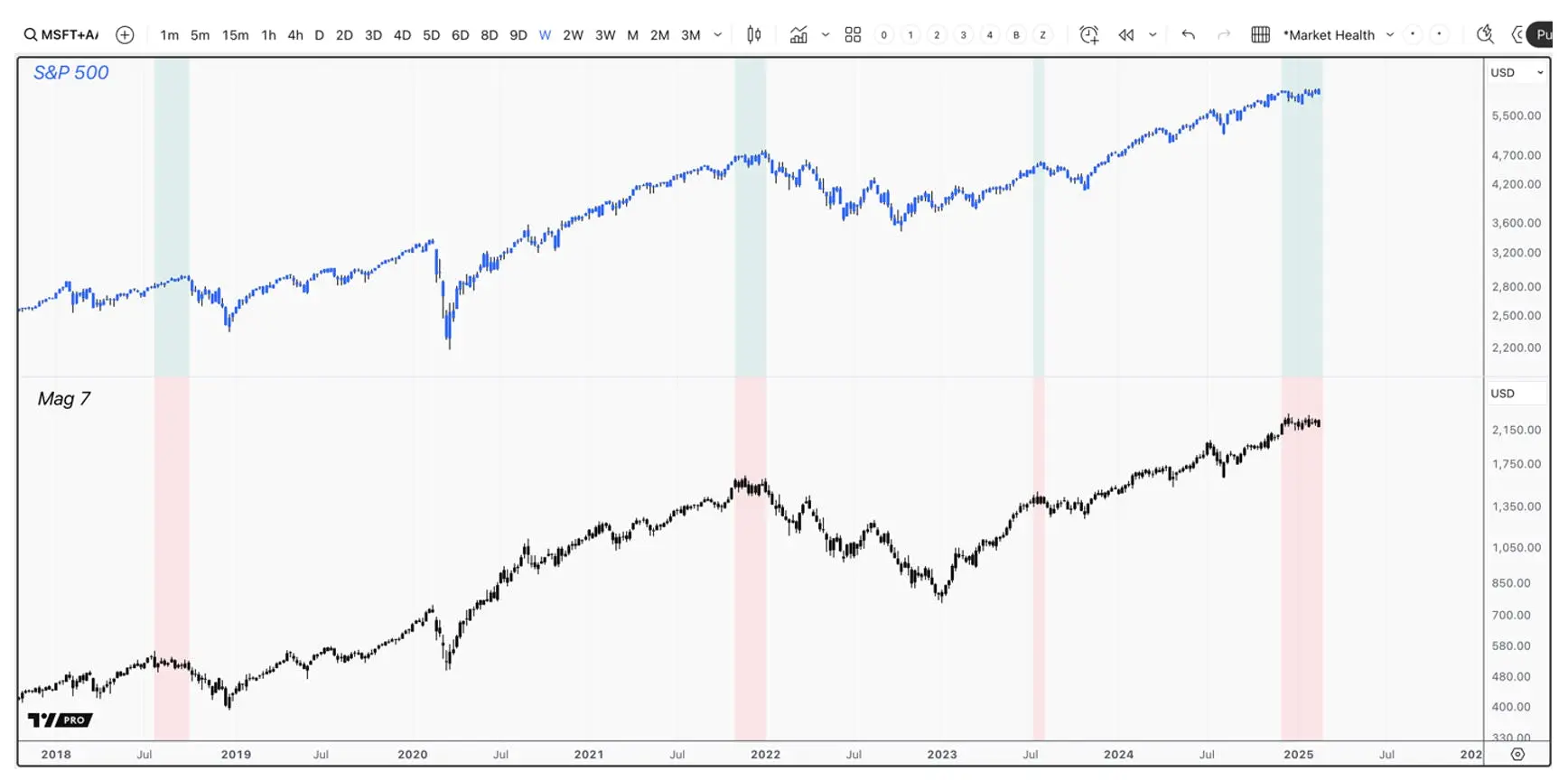
For the AI driven bull market to continue, it follows that the companies responsible for funding the build out of expensive AI infrastructure should also look strong. This is simply not the case, as many of them are already confirming breakdowns that are underway.
Microsoft (MSFT)
Microsoft is one of the Mag 7 stocks that has spent the most in this AI Capex cycle, spending more than $116 billion in 2023 and 2024 combined. For 2025, Microsoft is estimated to spend at least $90 billion, though this may be higher considering it has outlined plans to spend at least $80 billion towards AI data center capacity in fiscal 2025 ending in June.
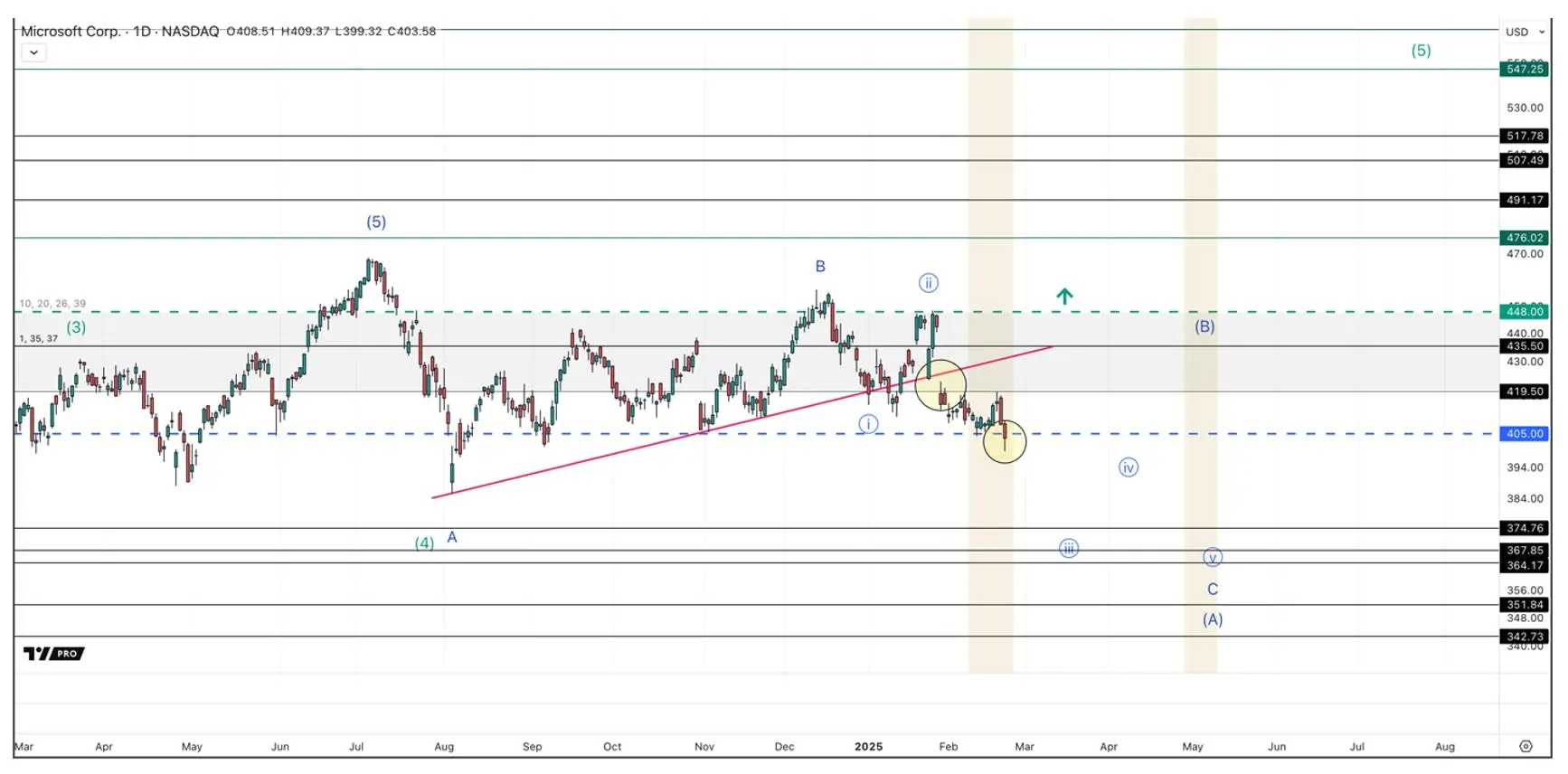
Interestingly, it has also not made a new high since July of 2024. We have since seen what looks like a large distribution between the $448 – $419 region. Note the two breakdowns circled in yellow. The first was a break i the uptrend, while the 2nd is a breakdown below the $405 support. Unless MSFT can reclaim the $419 – $448 region, the pressure will remain down. Microsoft is likely one of the Mag 7 leading this decline, and it is targeting the $375 – $350 region, if buyers don’t step in soon.
Google (GOOGL)
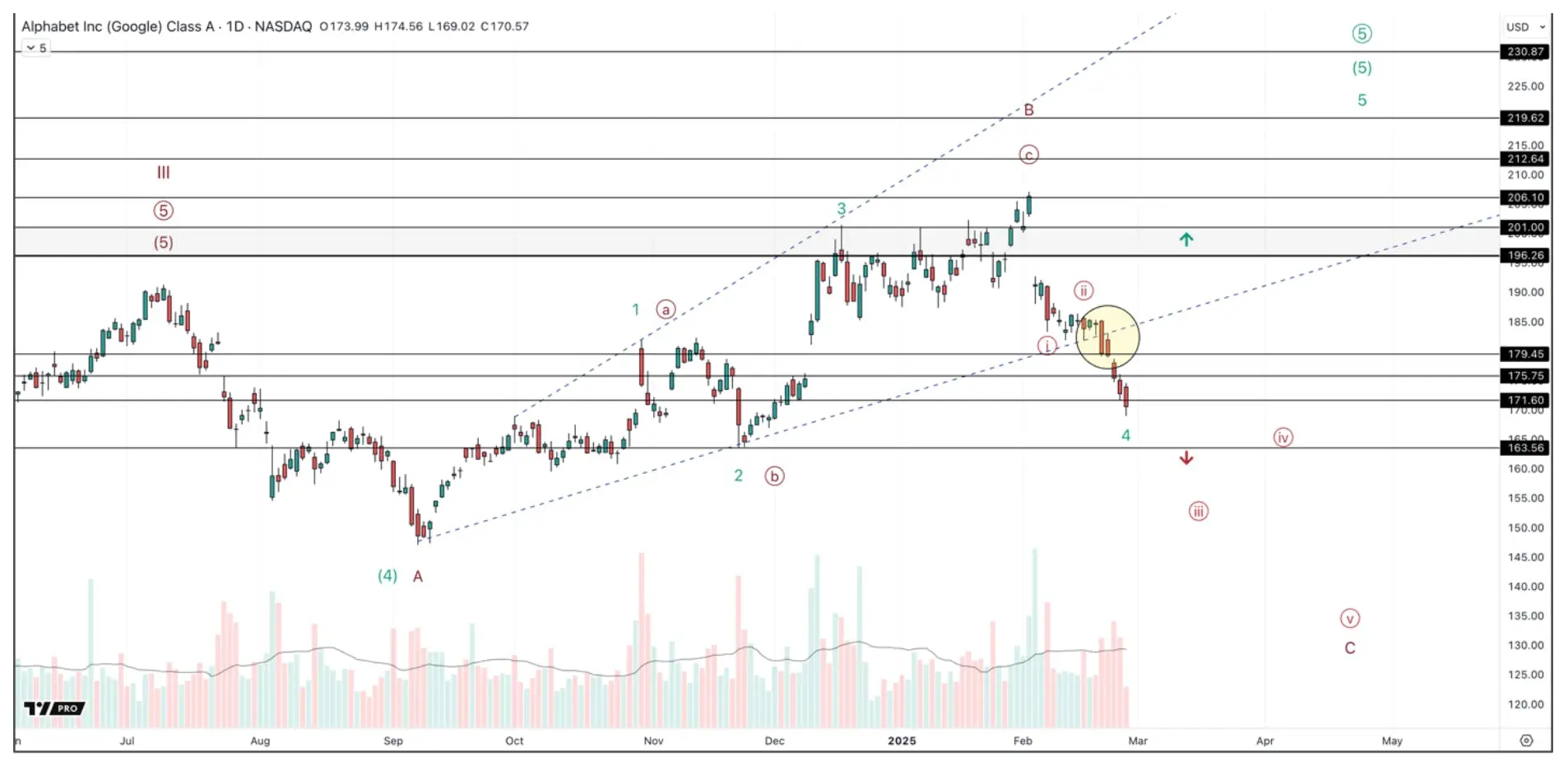
Google has contributed approximately $85 billion in capex expenditures over the past two years, with 2025 forecast to see spending rise 43% YoY to $75 billion. Google is one of the more concerning charts of the Mag 7. It topped on February 4th, just before its last earnings report. Since then, it has seen a sharp drop that is flashing warning signs. Google just broke below the uptrend line that has supported the uptrend since the September 2024 low. This is a notable development in technical analysis that suggests more volatility is ahead. GOOGL will need to reclaim this trendline soon to invalidate the signal. If it does reclaim the trend line, it will also need to also reclaim the $196 resistance level to suggest that it could see another push to all-time highs.
Meta (META)
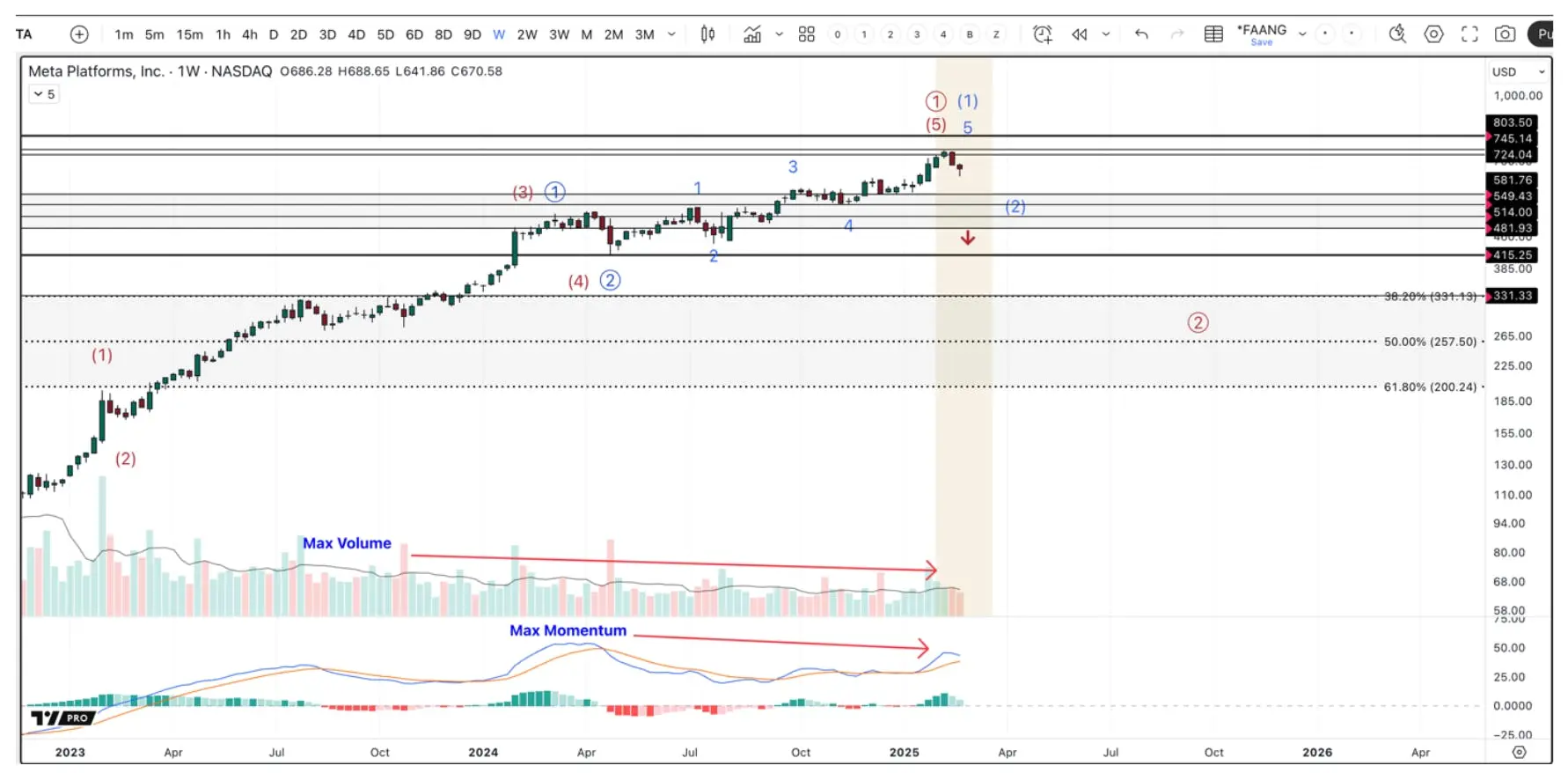
Meta is projected to spend around $62.5 Billion in capex by the end of 2025, nearly equal to the $66.8 billion it spent in 2023 and 2024 combined. It has also been the strongest MAG 7 in the recent uptrend and has been a heavy spender on its AI build out and a key player in the current bull market. After making a fresh all-time high two weeks ago, what’s worth pointing out is that it did so with lower momentum and lower volume. This is typical of 5th waves, which lines up with the larger pattern that started on the 2022 low.
Considering that price is not below the last two weeks’ lows, it supports a period of volatility into the $590 – $481 region. META must hold $419, or a much deeper correction will unfold.
Amazon (AMZN)
Amazon has spent the most, so far, to build out their AI infrastructure. Spending totaled nearly $136 billion in 2023 and 2024 combined, with $104 billion more expected in 2025.
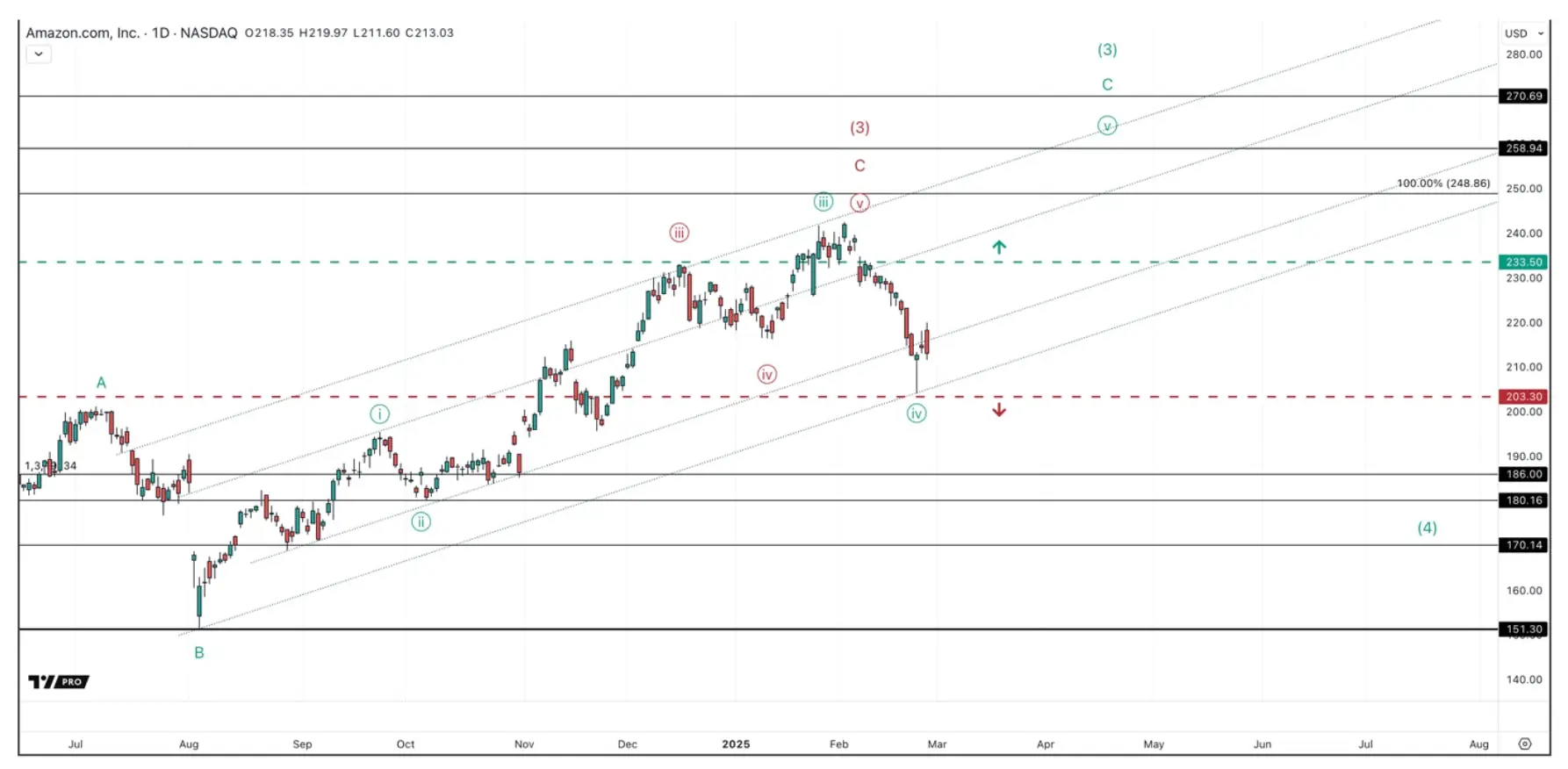
Like GOOGL, the market did not like what it reported in its earnings, showing a sharp drop. Amazon had a strong reaction off the $203.30 support. If AMZN is going to make a new high, it will need to clear $233.50. Even if we see a push to new highs, it does not look like a breakout worth chasing, as it will be the 5th wave, and final swing, in a very large 3rd wave. The 4th wave should take us sub-$200 and last for several months. If instead we break below $203.30, then we have already topped and will look for a low between $186 – $151.
Nvidia (NVDA)
Nvidia has been the primary recipient of the above Big Tech companies’ CapEx spend. For this reason, it has been the darling of the current bull market, and one of the most important stocks regarding the AI focused bull market.
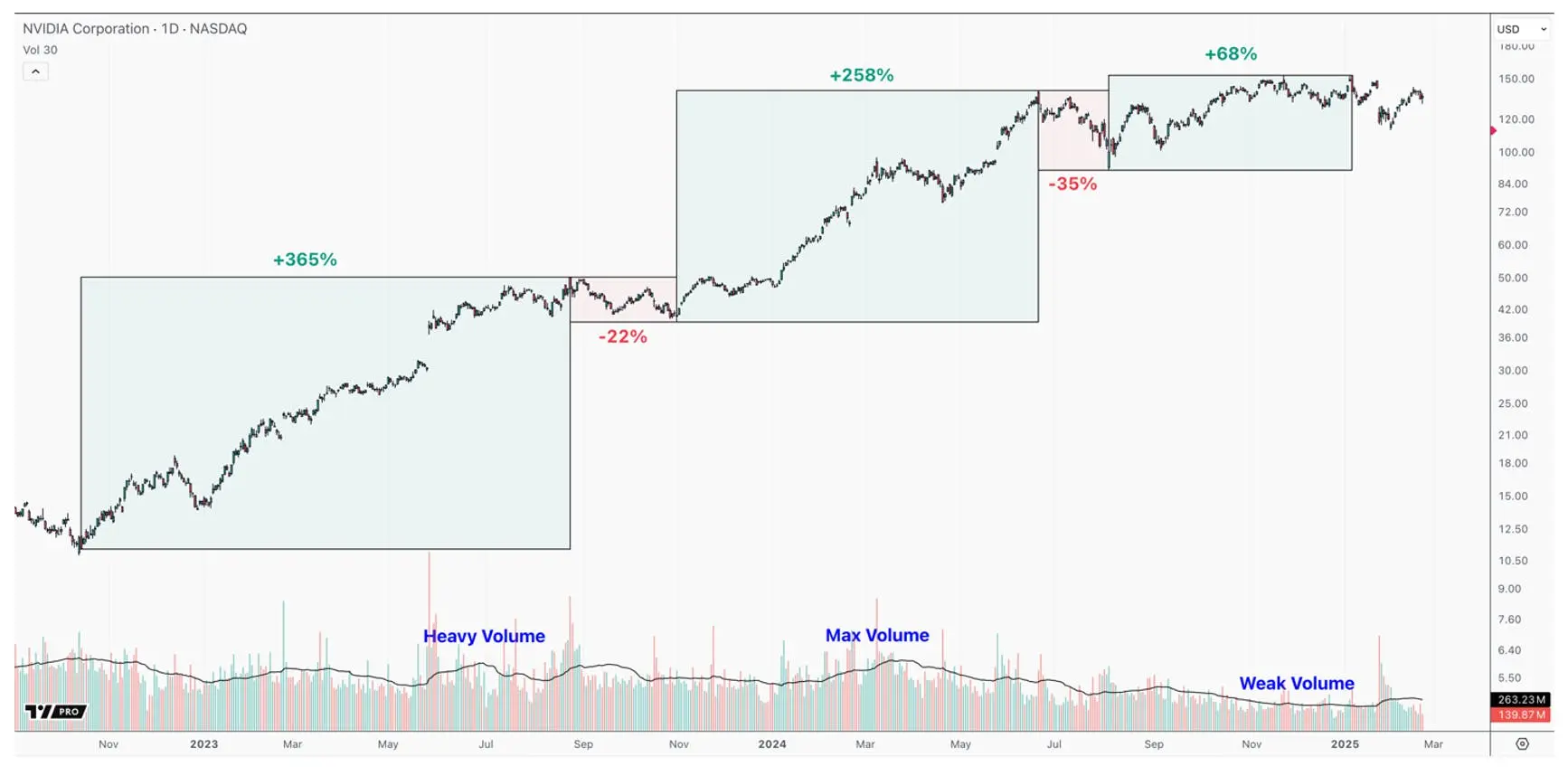
Since the 2022 low, there have been three clear uptrends. We are in the 3rd of these, and it is markedly different than the prior two. For one, unlike the 1st two, the uptrend that started in August of 2024 is relatively weak with a messy and overlapping structure. The prior two were nearly vertical. The second notable difference is that volume is weakening as price goes higher into the current uptrend. This is not like the prior two uptrends that saw volume expand with price.
If we examine the potential pattern the current uptrend is taking, there are only two that make sense, given the price action.
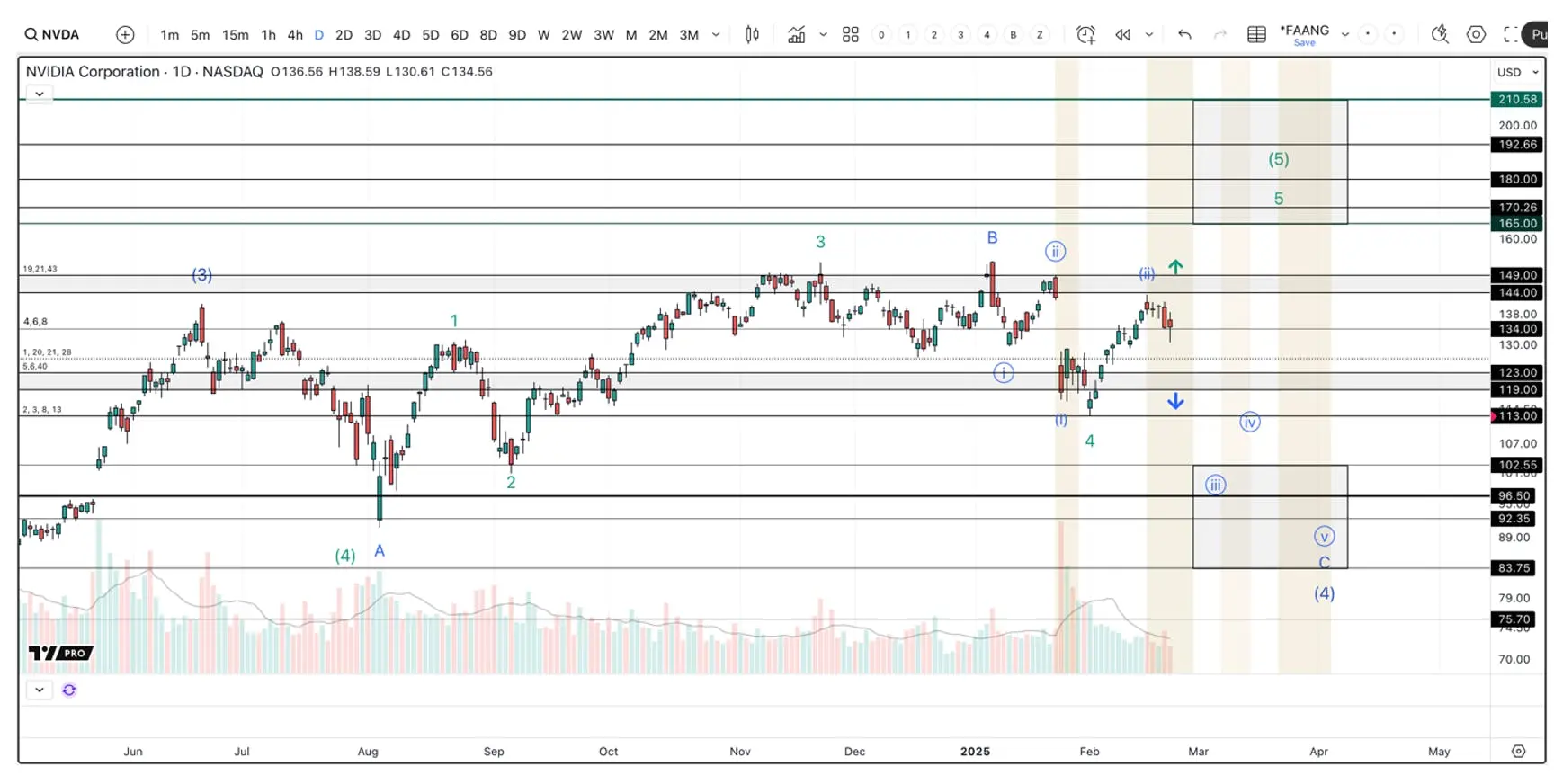
- The Green Count – If this is a continuation of the larger uptrend, it is taking the form of an ending diagonal pattern. These patterns are the final 5th wave in a larger 5 wave uptrend, and they tend to follow a powerful 3rd wave uptrend, which is what we saw with NVDA in 2024.
Ending diagonals are also a 5 wave patterns that have significant overlaps and are relatively weak. If this is the pattern in play, we will need to hold over the $119 – $123 support zone and then break above the $144 – $149 resistance zone. If this does happen, we will be in the 5th wave of this ending diagonal, which will target between $165 – $211. This will end the 5th wave and should lead to a notable retrace.